Visit Velika Planina: slovenia’s Shepherd Settlement
LAST UPDATED: 1st November 2026 | ORIGINAL: 31st October 2026
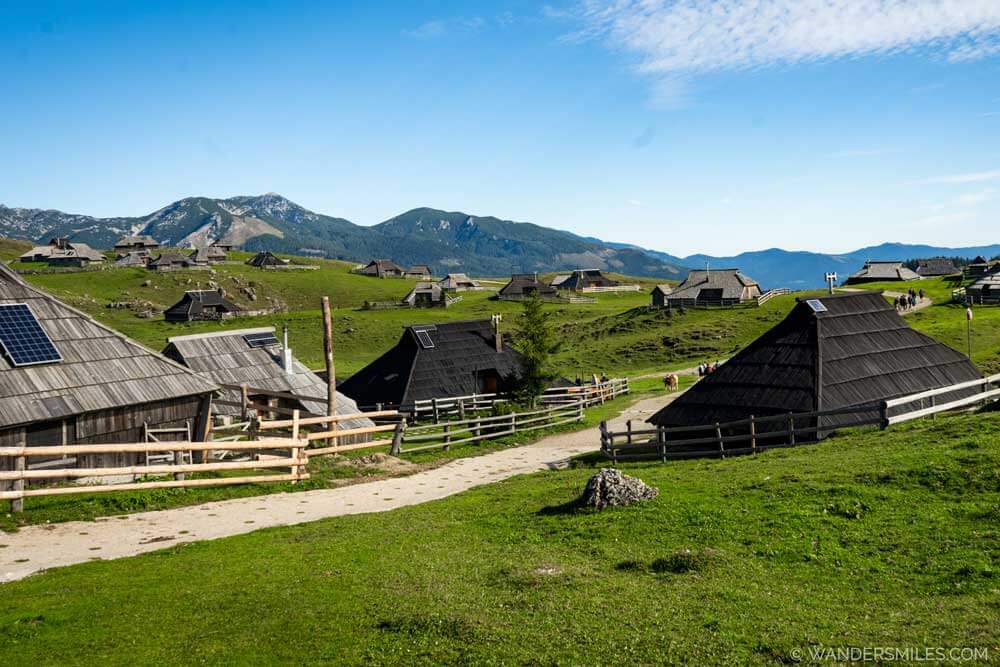
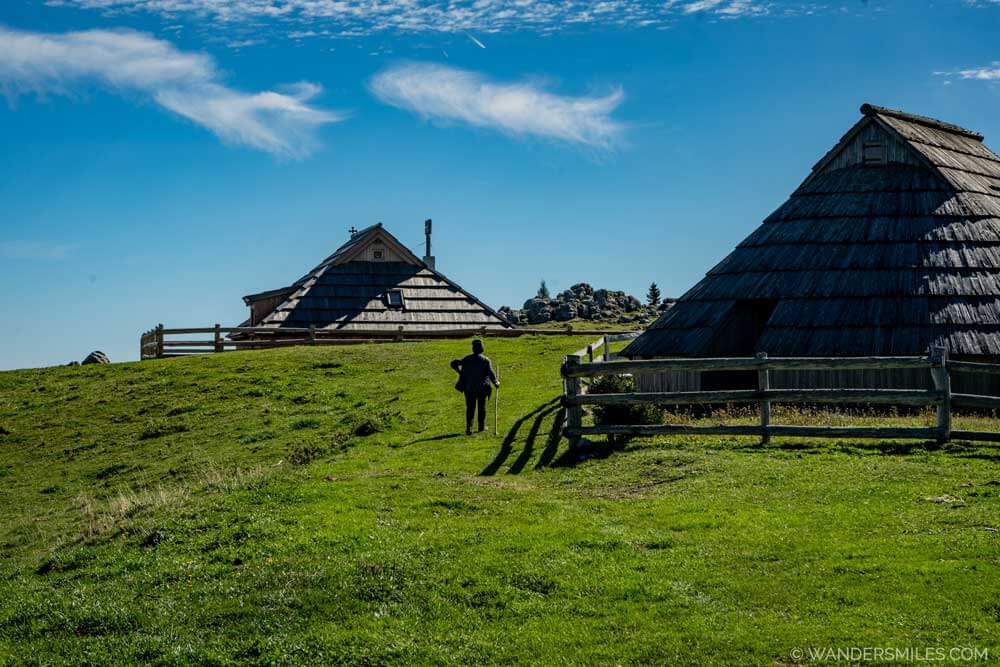
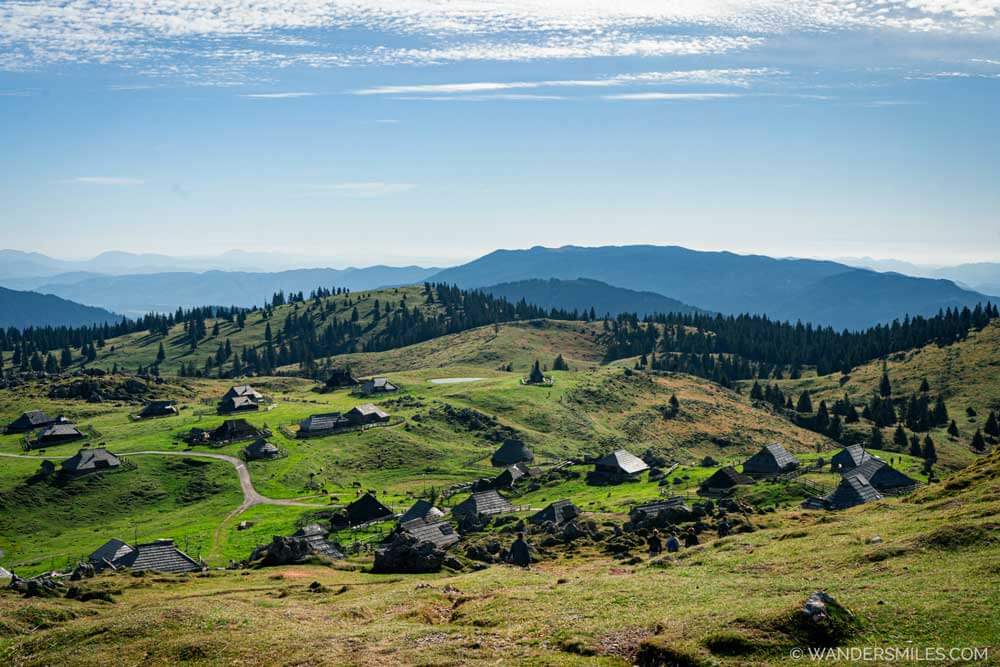
High above the Kamnik Alps, about an hour from Ljubljana, sits a plateau that looks like a village built for a storybook. Velika Planina is a high alpine pasture covered in more than a hundred wooden huts, clustered in tight groups whose grey pine-shingled roofs bend low against the wind.
For most of the year it is quiet. From June to September, Velika Planina fills with shepherds, cows and the sound of cowbells, and anyone who takes the cable car up can walk straight into that working pastoral life.
This guide covers everything you need for a day on the plateau: what to see and do, where to eat, how to get there, what tickets cost, and when to plan your trip. Are you ready to visit Velika Planina?
If this is your first time here, a quick hello. I’m Vanessa. This blog is where I write about travelling mindfully with a bit more attention to the local history and culture behind a place. Velika Planina is very much my kind of story. A plateau where shepherds still bring their cattle each summer is living heritage rather than a preserved exhibit, and once I read about it, I wanted to see it for myself.
The heritage of shepherding on Velika Planina
One of my favourite parts of the visiting Velika Planina is learning about the pastoral heritage because the pasture is far older than any of the buildings on it. People were grazing animals up here long before anyone wrote it down, and the first record of a dispute over the land dates to 1538, when the Count of Kamnik sued townspeople who claimed grazing rights above the Bistrica valley. In the Middle Ages the mountain carried horses rather than the cattle you see today .
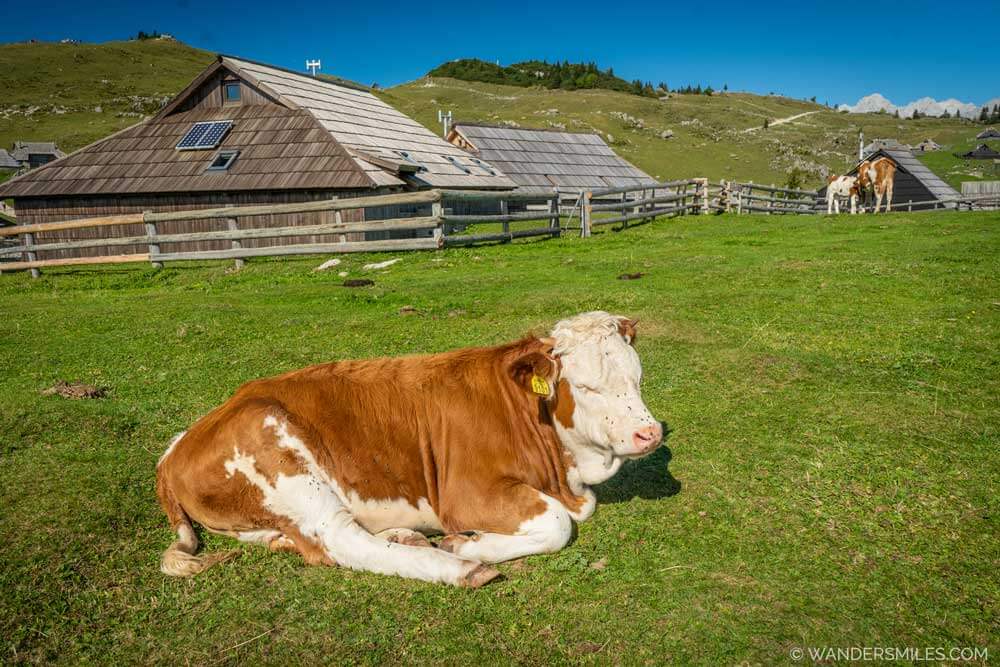
The rules behind it are just as old. A grazing right belonged to a farm and was inherited with it, and each farmer could keep only as many animals as his own land could feed through the winter, because the mountain pasture existed to save the valley’s fields and hay for the cold months . By the mid-18th century, 171 local farmers held those rights, and in 1913 the pasture was split into Velika, Mala and Gojška planina. Today it’s Slovenia’s largest mountain pasture, around 1,070 hectares, where hundreds of cows grazing on it.
The huts tell the same story. Before the First World War they were built only in the oval shape you still see at the Preskar Museum, with a low shingled roof, no windows and no chimney, just a smoky hearth inside. German forces burned the settlement near the end of the Second World War, and in 1945 the herdsmen rebuilt on the same foundations, this time with square walls and windows. Only Preskar’s hut was restored exactly as it was, and it’s the museum now, while the plateau itself is protected as a cultural landscape.
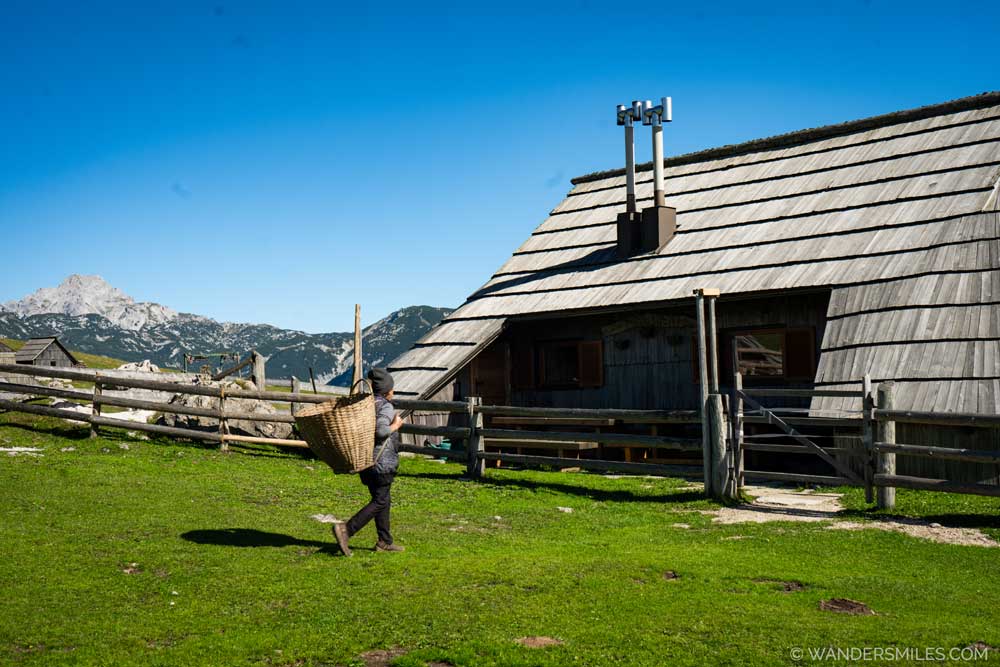
Life up there still follows the traditional way. The cows go up in June and come down in late August or early September. The huts have no running water, and in the past herders carried snow up from Veternica cave to melt for drinking water . These days, the huts have a modern addition by running on limited solar power.
Things To Do on Velika Planina
See the shepherds’ settlement
The settlement is the reason most people come, and it is one of the largest of its kind in Europe. The huts, called herdsmen’s huts on the Kamnik side of the plateau, are built from wood and stone and roofed with pine shingles known locally as šinkel. They sit low and wide, almost touching the grass, because the plateau catches serious winter weather.
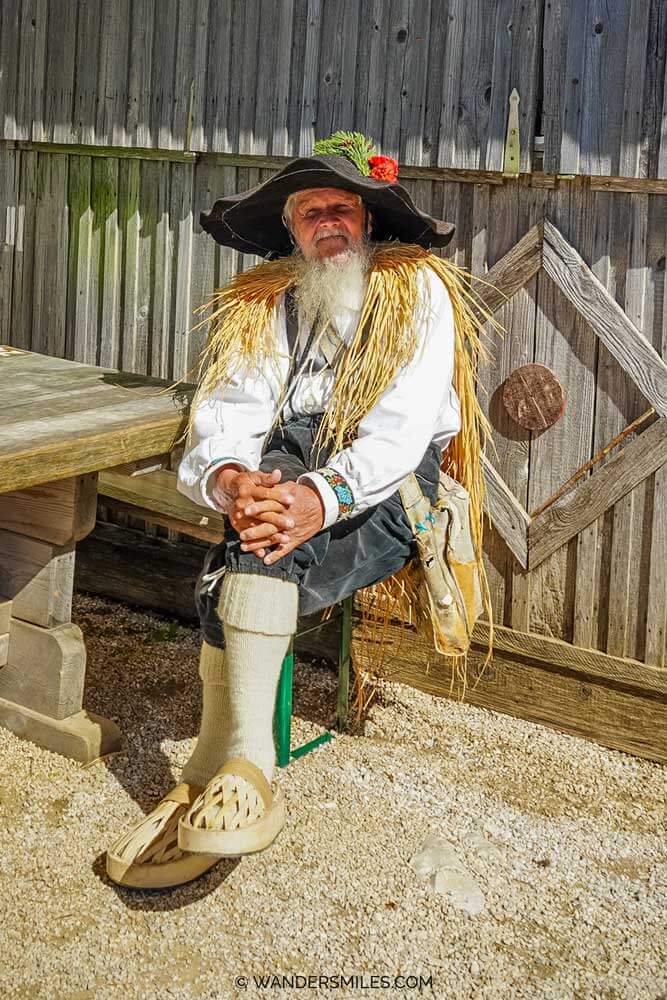
The settlement comes back to life every June, when the shepherds return to the plateau and tend their cattle until September. They are usually happy to sell you cheese, sour milk or cottage cheese straight from the huts, and some serve a traditional shepherd’s lunch of sour milk and buckwheat mush. Bring cash for this. The shepherds do not take cards, though the restaurant nearby does.
Visit Preskar Museum
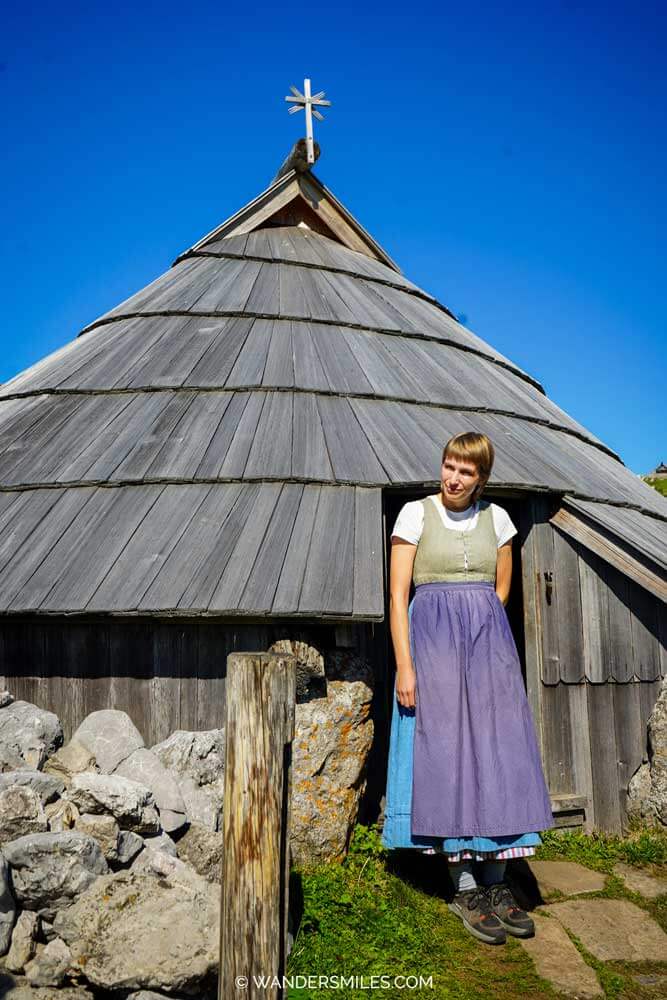
In the middle of the settlement stands the Preskar Museum, a single oval shepherd’s hut with a stone fence around it and a cross on the roof that was once meant to protect the shepherds from storms and bad luck.
The original building burned down just before the end of the Second World War, and Andrej Preskar rebuilt it on the ruins in the summer of 1945, keeping the same distinctive oval shape it had before the war. That carefully preserved form, along with the hut’s modest size and simple interior, is what gives it museum value today.
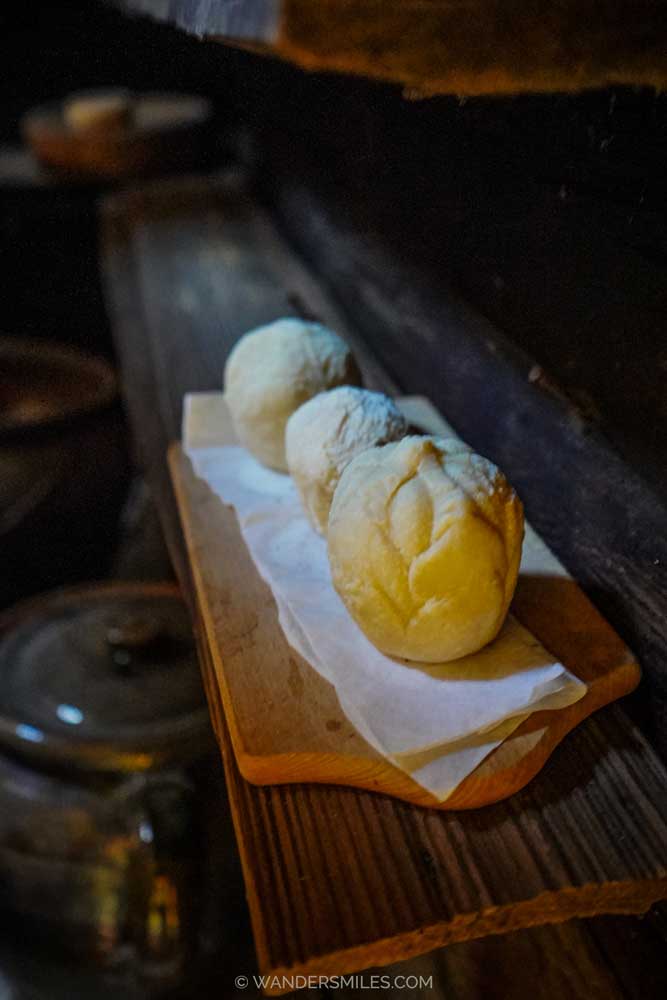
The Preskar Museum is open daily during the grazing season, and at 1 pm there is a demonstration of trnič making, the hard pear-shaped cheese that is Velika Planina’s signature food]. Trnič is traditionally made by hand and decorated with wooden stamps, and it comes with a love story attached: young shepherds gave it to their sweethearts .

Check out the Chapel of Our Lady of the Snows
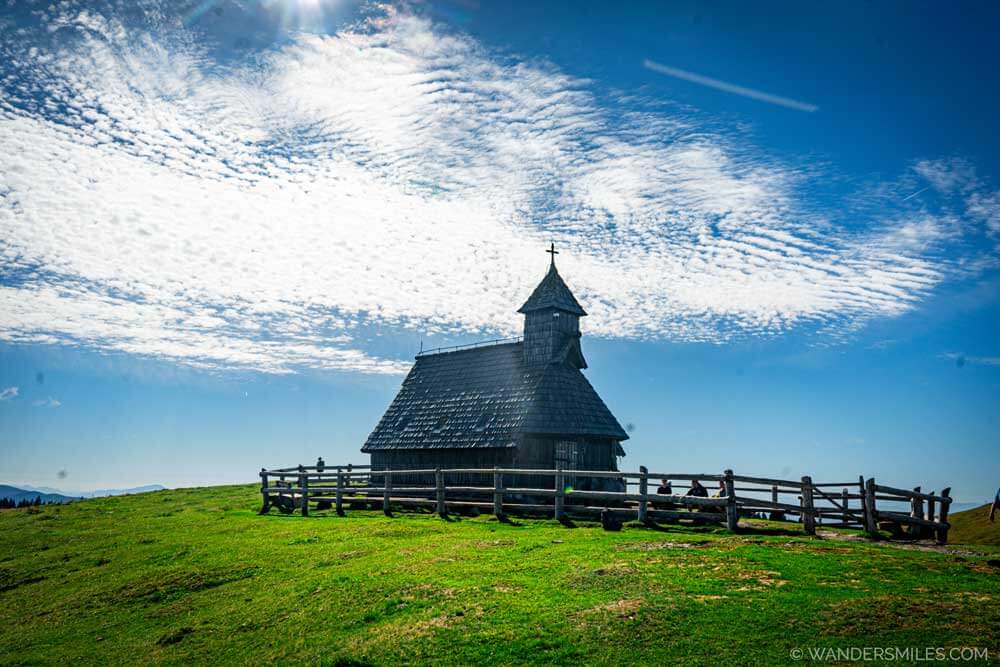
Slightly above the settlement, on a small rise, stands the wooden Chapel of Our Lady of the Snows. The original chapel was built on the same spot in 1938 to plans by Jože Plečnik, Slovenia’s best known architect, and it was burned down by German soldiers during the war. The shepherds rebuilt it in 1988 on their own initiative, to a design by Vlasto Kopač. Before the chapel existed, shepherds prayed together in the open air each evening, and on Sundays they gathered at Zeleni rob to listen to the church bells rising from the valley.
The date 5 August, the feast of Our Lady of the Snows, is a holiday for the chapel and the whole settlement. In summer, mass is held every Sunday, and several thousand visitors turn up for these services. If you happen to be there around Christmas, the midnight service is famously atmospheric.
Stop for a Slovenian lunch
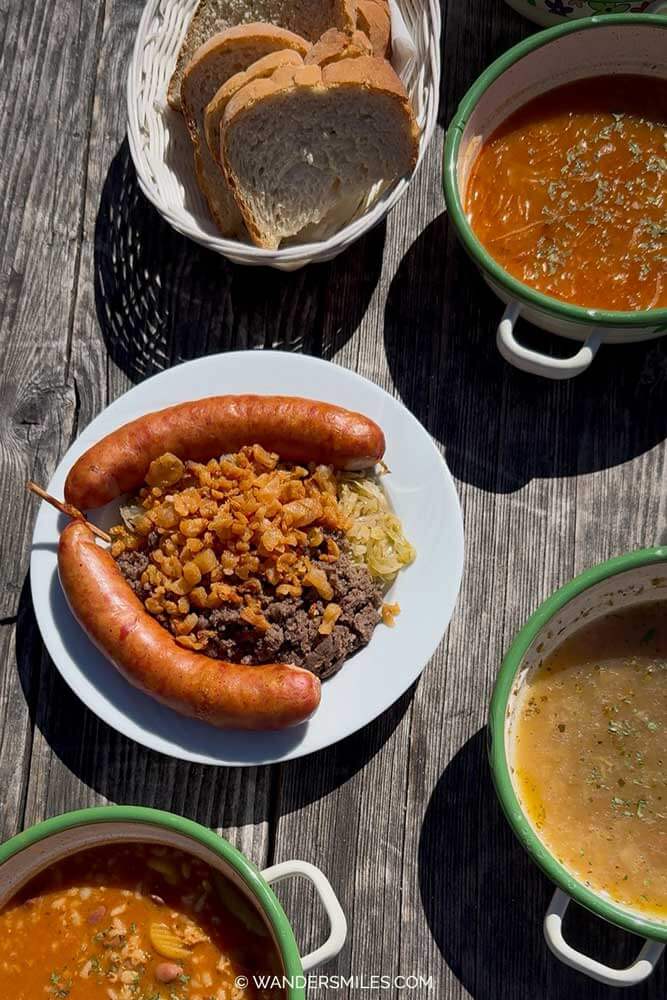
Zeleni Rob is the only restaurant on the plateau, and it is the easiest place to eat well without carrying your own food. It sits at Tratice, near the mid-station of the chairlift. I wholeheartedly recommend a leisurely home-cooked lunch with those jaw-dropping alpine views.
The menu is built on local and seasonal produce from nearby farms, and the signature dishes are homemade cottage cheese štruklji (rolled dumplings) and buckwheat žganci, alongside hearty mountain soups, stews, sausages and sauerkraut. It’s simple, substantial peasant cooking, shaped by farm work and by whatever grows close at hand, which is why the same dishes turn up in mountain huts across Slovenia, including along the roughly 600 kilometre Slovenian Mountain Trail that crosses from the northeast of the country to the coast.
Zeleni Rob is open year-round, and in 2024 it was awarded the Green Key eco-label for its sustainability work.
Explore the hiking routes
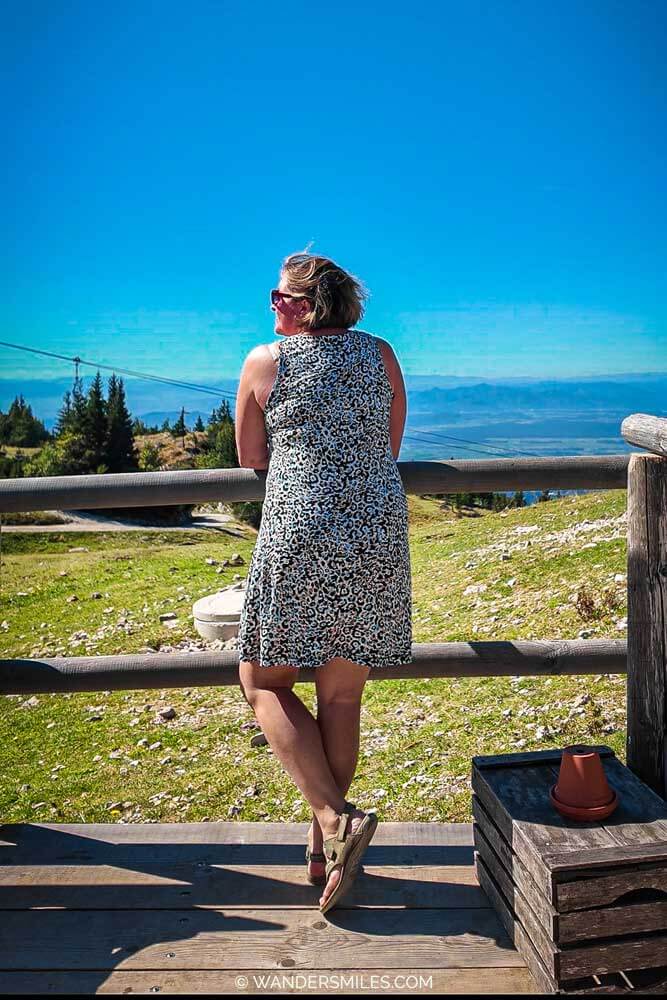
Once you are on the plateau, the walking is gentle and well marked. The plateau has routes for every level of fitness, from short family strolls to longer loops toward viewpoints such as Gradišče, Mala Planina and the shepherd’s village.
The easiest option is a loop around the plateau itself after arriving by cable car, which keeps the distance short and the terrain kind. On the way you can add two natural detours. Veternica cave is the most popular natural sight on the plateau, a collapsed cave system where patches of snow sometimes survive the summer. A little further along is Dovja Griča, a 9 metre deep cave in the Tiha Dolina valley that features in local legends about wild men who lived inside the rock.
If you are there in late spring, watch the pastures for the purple Nigritella or Kamnik flower, Nigritella lithopolitanica, which blooms mostly in June and is rare enough to be listed as endangered in Slovenia. Keep to the marked paths, admire the flowers from a distance and do not pick them.
For those who want the tradition explained, the plateau has a Pastoral Footpath Trail with interpretation of shepherd life past and present.
Best time to visit Velika Planina
The chairlift operates mainly in the summer months, so if you want the quick ride to the top, plan for late spring through early autumn. The plateau itself is open all year, but the facilities thin out outside the season.
If seeing the shepherds and the cattle at work is your main reason for coming, aim for the grazing season. The shepherds return to the settlement in June and stay until roughly mid-September, depending on the year, and the shepherd huts that sell dairy products are only open in that window. The shepherds’ huts and cows are therefore a summer and early autumn sight, while April and May are better for crocuses, wildflowers and quiet trails.
One practical point: the cable car and chairlift run on a reduced timetable outside peak season, and they close for annual maintenance each autumn, so always check the current timetable on the official site before you set out.
Getting to Velika Planina
By Car
Driving is the simplest option if you are coming from Ljubljana. Head for Kamnik and then continue toward Kamniška Bistrica, where the lower cable car station sits. Parking there is free and open 24 hours a day, and there are two free lots, one next to the station and one across the highway.
If you would rather start your walk higher, there are parking areas further along the road toward the plateau at Rakov Ravni, Ušivec and Mačkin Kot. From these lots, hiking paths lead up to the plateau in about 1 to 1.5 hours of moderate walking, depending on where you park. In winter the road is plowed only as far as Rakov Ravni, the first of the three.
|| CHECK OUT CAR HIRE FROM LJUBLJANA
No car? Two other options
Take a Guided Tour To Velika Planina
You can join a guided tour from Ljubljana, which takes care of the driving and the mountain roads. Reviews vary, so check what is included before booking.
Stay In Kamnik
Alternatively, base yourself in Kamnik, the nearest town, and take a taxi up to Kamniška Bistrica. From Kamnik you can also reach Stahovica and pick up the marked route to the plateau on foot.
|| CHECK OUT WHERE TO STAY IN KAMNIK
The cable car and chairlift
From Kamniška Bistrica, the cable car lifts you to the upper station in about five minutes, which saves you the steep mountain drive and a lot of time. The upper station sits at roughly 1,412 metres.
From there you have two choices to reach the plateau:
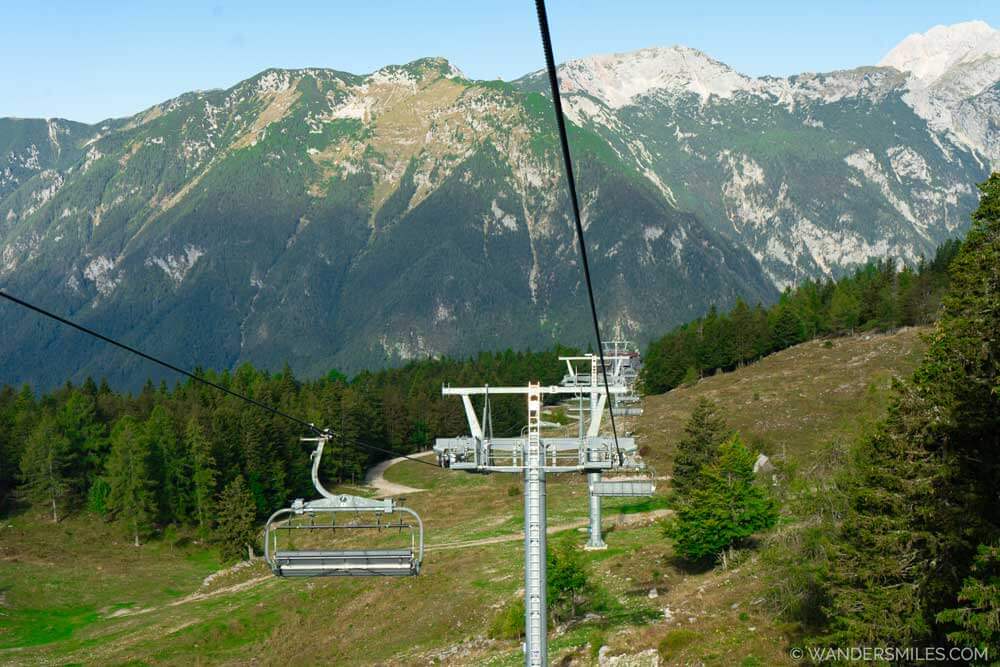
Chairlift: the modern six-seat chairlift takes about 7 minutes to the top at Gradišče, 1,666 metres. From the top station it is a 10 to 15 minute walk down to the shepherd’s village.
Walk up: a marked path climbs to the plateau in about 30 to 45 minutes at a moderate pace, or 45 to 55 minutes if you take it slowly.
A useful tip if you walk: leave the cable car, follow the macadam road past the Zeleni Rob lodging house, and follow the signs for the herdsmen’s settlement. You will reach the settlement about 15 minutes later, and Veternica cave comes up after roughly 5 minutes on that road.
Tickets and timetable
Tickets come in a few combinations. Most visitors buy a return ticket for the cable car and chairlift together, but you can also buy a cable car only return if you plan to walk up from the upper station, or a chairlift only return if you drove to one of the higher parking areas and only want the final lift. Rates are reviewed each year, so check the official price list before you go .
On timing, the two lifts run on different schedules. Outside peak season the service is limited to set departure times rather than a continuous loop, the cable car starts earlier in the day than the chairlift, and the chairlift stops sooner in the afternoon, so plan your descent around the last departure. Times shift with the season, and both lifts close each autumn for maintenance, so check the official timetable for your date.
|| IF YOU HAVE A LJUBLJANA CITY CARD, THE CABLE CAR IS INCLUDED, OTHERWISE BUY TICKETS ON THE VELIKA PLANINA WEBSITE
Practical tips to Visit Velika Planina
Wear layers. The plateau is exposed and can be cold in the morning and evening, especially in autumn. Sturdy shoes, a windbreaker, a hat and sunglasses all earn their place in your bag, and a hiking pole helps on the descent.
Bring cash for the shepherds’ huts. Card payment works at Zeleni Rob but not at the huts. Pack out your rubbish, keep dogs on a leash, do not walk into caves or pits, and stay on the marked paths. And keep a respectful distance from the cows: they are working animals, and the shepherds appreciate visitors who give them space.
Book ahead for tourist huts. If you want more than a day in Velika Planina, you can book one of the tourist huts on the plateau for an overnight stay, though reservations are required. Sad to say, I didn’t have time for an overnight stay on my trip but I hear that staying up there means you catch the plateau in the soft light after the last cable car leaves, which is a very different experience from the midday crowds.
PIN to Visit Velika Planina
Disclosure: This post contains affiliate links, which means I may receive a small commission if you click a link and purchase something that I’ve recommended. It comes at no cost to you. Thank you for your support.