Düsseldorf City Guide For Responsible Travellers: Where to Eat, Stay, and Explore
LAST UPDATED: 11th January 2026 | ORIGINAL: 27th September 2025
When you search for sustainable European cities, Düsseldorf might not be the first that pops up. If you’re planning a trip and wondering how to reduce your footprint while exploring, Düsseldorf deserves a closer look.
Travellers today face a challenge: you want to see new places, but you also want to do it responsibly. It’s easy to feel overwhelmed — should you choose a hotel with the right certifications, avoid flights, focus on low-impact activities or locally-owned?
Düsseldorf provides a practical case study, showing what’s possible when a city invests in real solutions to help combat the recorded rise in temperatures, reach climate neutrality by 2035. From environmental planning to eco-conscious construction, there’s a lot happening in Düsseldorf that goes beyond the usual greenwashing claims.
I’ve spent time exploring Düsseldorf with sustainability in mind, from where to eat, shop and stay, and joining the city’s Climate Walk. My focus is on responsible adventure and cultural travel, so I want to help you navigate the options without the stress. If you care about supporting local businesses, reducing your footprint, and still enjoying everything from Altbier to avant-garde art, this Dusseldorf city guide is for you.
Let’s break down how responsible tourists can experience the ultimate Düsseldorf city break!

Travel can’t ever be perfectly sustainable, but in this Düsseldorf guide you’ll find practical ways to explore Germany’s sixth-largest city more responsibly, with plenty of tips on:
- sustainable transport
- locally sourced meals and organic cuisine
- best ‘green’ places to stay
- the best activities in Düsseldorf
- how to plan your trip
MY TOP TIPS: If you’re planning to visit Düsseldorf, you may wish to tag on more cities only a train ride away, and s stopover for 1 Day in Brussels is always a good idea! It’s worth checking out Düsseldorf tour options to start creating your itinerary.
How sustainable is Düsseldorf?
Düsseldorf is steadily positioning itself as a sustainable city through forward-thinking construction, climate-focused planning, and community initiatives. The Climate Pact (“Klimapakt”) brings local companies together to help the city reach its goal of becoming climate neutral by 2035. Members commit to measuring their carbon footprint, and even Visit Düsseldorf joined in 2024, calculating its own emissions for the first time.
Düsseldorf is getting hotter, and the city is adapting in smart and visible ways. The switch to lighter paving to reduce heat, subsidies encouraging residents to install heat pumps and drought-resistant plants on their roofs, and the cooling effects of green tram tracks.
Tree planting is a priority. Around 200 sycamores and chestnuts line the famous Königsallee boulevard. Linden trees are being introduced to add shade, fragrant summer blooms and are resilient to pollution. Various other trees also included in the urban planning that have their own irrigation systems keep them alive during long, dry summers.
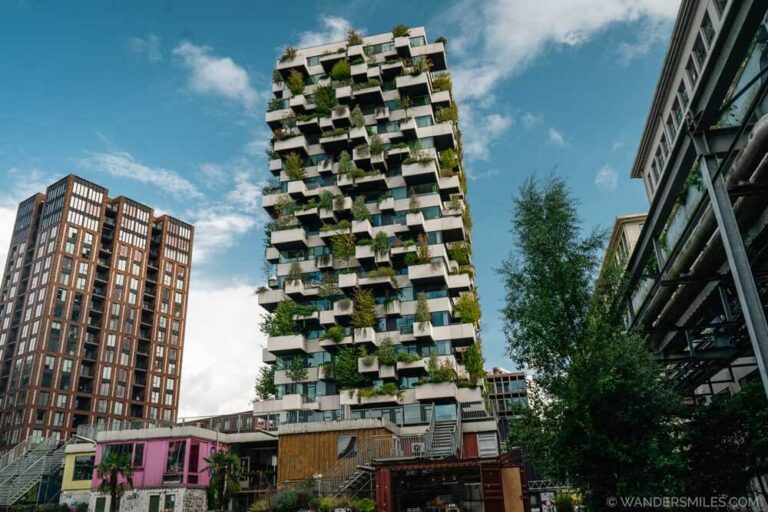
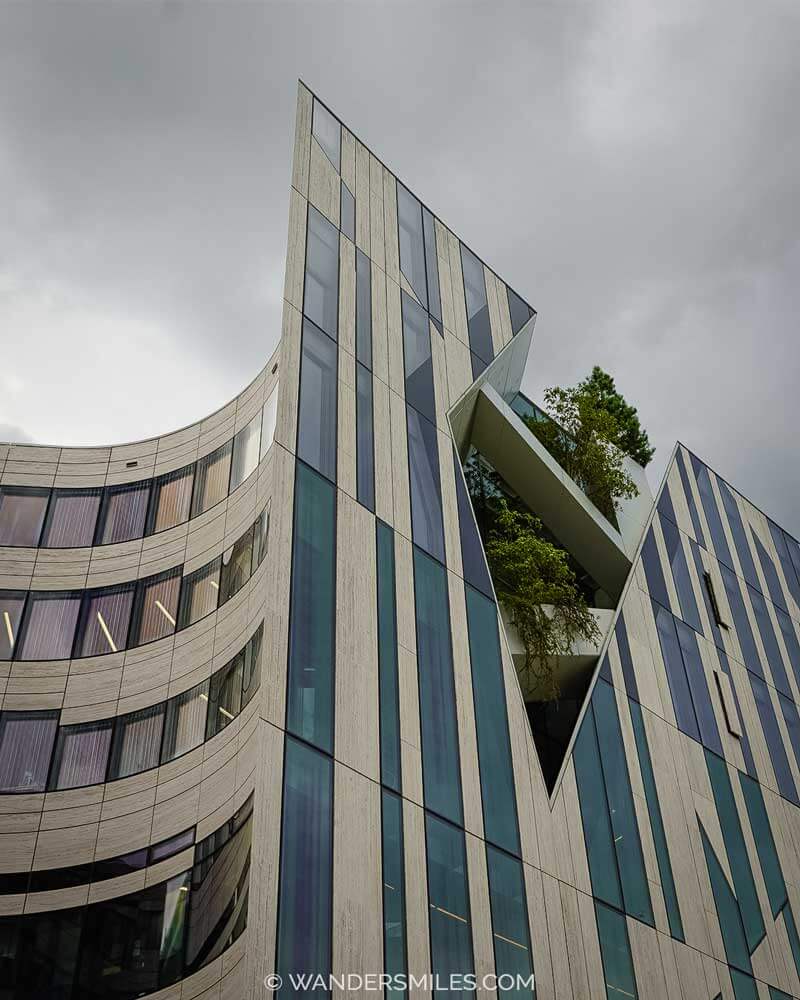
Architecture plays a big role. Designed by Daniel Libeskind, the first Kö-Bogen links the shopping district with Hofgarten park through its magnificent glass frontage. Opposite, Kö-Bogen II features Europe’s largest green façade, with 30,000 hornbeam hedges that absorb CO₂, improve air quality, and cool the city centre. The Cradle in Mediahafen, Germany’s first sustainable timber hybrid office building, is designed for circular construction with materials that can be reused or recycled.
Germany as a whole is one of the greenest countries in the world, producing more than 54% of its energy from renewable sources like wind, solar, biomass, and hydro.
Düsseldorf is pushing for cleaner mobility with a mix of innovative transport solutions. The city operates a low-emission zone and continues to expand its network of electric vehicle charging points. For those avoiding cars altogether, cycle-friendly infrastructure and bike-sharing schemes offer practical alternatives for getting around. Public transport is also evolving, with electric trams already in service and Germany’s first e-bus depot in Düsseldorf debuting automated charging for up to 60 vehicles.
|| WANT TO KNOW MORE? BOOK THE CLIMATE WALK IN DUSSELDORF — I learned a lot during the guided tour which is based on the city’s climate adaption strategy.
 Kö-Bogen
- Green tram tracks

How To Visit Düsseldorf Sustainably
Stay in Green Hotels in Düsseldorf
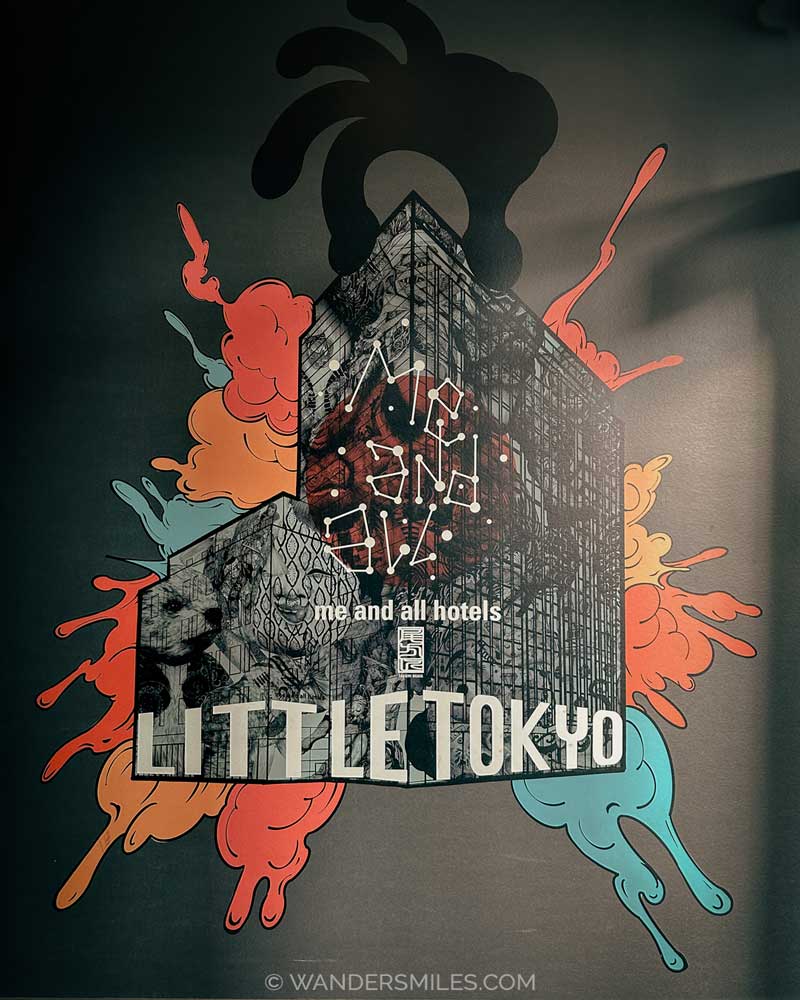
Me and All Hotels Düsseldorf
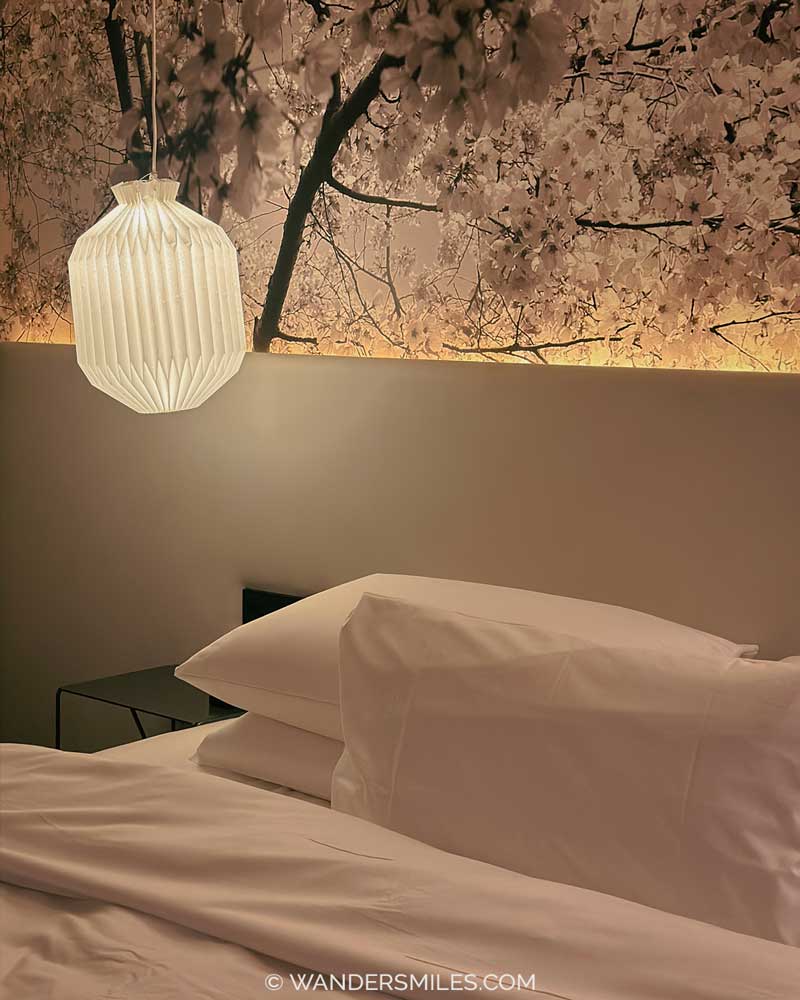
I stayed at Me and All Hotels Düsseldorf, where the funky Asian-inspired décor reflects its location in the heart of Little Tokyo. This affordable hotel includes thoughtful details such as regional produce, fair-trade coffee, and partnerships with local businesses. It also supports the environmental organisation Project Wings, giving guests the option to skip room cleaning in favour of sustainability projects.
The hotel group holds GreenSign certification for its energy efficiency and responsible sourcing. So, for responsible accommodation in Düsseldorf with a central location, this is a fabulous option!
- Bedroom at Me And All Hotels in Little Tokyo
- Entrance to Me And All Hotels in Little Tokyo
Other Green-Certified Accommodations
Full disclosure — I didn’t get the chance to stay at these hotels myself, but I did some digging to find centrally located spots in Düsseldorf that really walk the talk when it comes to sustainability and social responsibility. If you’re looking for somewhere that combines style with a strong CSR focus, these are great options to check out.
- MID-RANGE || 25hours Hotel Das Tour, features a Parisian-inspired theme that comes through in its design as well as in the cuisine and drinks served in the restaurant and bar. The hotel group is green certified and is also committed to responsibility, supporting a wide range of social projects both locally and globally.
- LUXURY || Hotel Kö59 Düsseldorf is a 5-star dog-friendly residence on the Königsallee, featuring a fitness and wellness centre and a restaurant serving seasonal dishes. The hotel holds green certifications and follows the GreenSquareConcept, highlighting its commitment to sustainability.
How To Reach Düsseldorf Sustainably
Düsseldorf is well-connected across Europe, so it’s worth exploring lower-impact travel options. Check your total journey time, and see whether you can swap flights for greener alternatives that suit your budget and travel style.
By Train
- I travelled from London with Eurostar via Brussels, then switched to a Eurostar (formerly Thalys) high-speed train to Düsseldorf.
- Direct trains link the city to Cologne, Frankfurt, Berlin and Amsterdam.
- International routes from Paris, Zurich, and Vienna make it a smooth option across Europe.
By Bus
- Long-distance operators like FlixBus connect Düsseldorf to major European cities.
- Buses are slower than trains but often cheaper and have lower emissions than flying.
By Bicycle
- Düsseldorf sits on the Rhine Cycle Route, part of the EuroVelo network — many adventurers are enticed by the safe cycle paths and bike-friendly accommodation.
By Car
- Ride-sharing platforms like BlaBlaCar reduce emissions and costs.
- Hiring an electric vehicle offers a lighter footprint if you are planning a day trip, especially with the city’s growing charging network.
|| YOU MAY LIKE TO CHECK ROUTES WITH TRIP.COM

Getting Around Düsseldorf Sustainably
Navigating Dusseldorf sustainably is incredibly easy, as the city prioritises green transport. While in Dusseldorf, I found walking and cycling to be the best ways to get around. Here’s a complete list of options:
Walk in the Car-Free City Centre
Düsseldorf’s compact centre makes exploring on foot an easy task. The Altstadt (Old Town), known as the “longest bar in the world”, where cobbled streets are full to the brim with breweries, cafés, and historical landmarks. Over by the Rhine, the promenade is traffic-free and perfect for a riverside stroll with skyline views. Königsallee has beautiful leafy canals, while Schadowstraße offers a mix of high-street names in a pedestrianised zone.
Use Public Transport (Trams & Buses)
Düsseldorf’s trams and buses are frequent, affordable, and eco-friendly, with many services now electric or hybrid. If you’re visiting as a tourist, the DüsseldorfCard is a great option, with free unlimited travel on all public transport in the city, plus discounts on museums and attractions.
For longer trips across Germany, the Deutschlandticket (€58 per month) gives you unlimited travel on regional trains, buses, and trams nationwide — an excellent choice if you plan to explore beyond Düsseldorf.
If you plan to explore beyond the city, the DüsseldorfCard Plus is a smart upgrade froim the the DüsseldorfCard. Not only does it include free travel on all local and regional transport (RE, RB, S-Bahn in 2nd class) across the Rhine-Ruhr and Rhine-Sieg networks, making day trips to nearby cities like Cologne or Essen easy and affordable.
|| GET ORGANISED: Grab either a DüsseldorfCard or DüsseldorfCard Plus which includes public transport, and free (or discounted) entry to the top attractions in the city
Rent a Bike
Düsseldorf has a well-connected network of bike lanes, and you’ll find rental options everywhere — from nextbike stations to hotel partnerships. If you have the DüsseldorfCard Bike, you can also rent bikes at a discount, giving you even more reason to ride along the Rhine Promenade or through Hofgarten Park at your own pace, without leaving a carbon footprint.
|| TAKE A BIKE TOUR with a knowledgeable guide. I loved the stops at iconic landmarks of Düsseldorf and lesser-known sights to explain the history and local legends.

Best time to visit Düsseldorf – Off-Peak and Shoulder Season
Like many destinations, Düsseldorf is at its best during the shoulder seasons — spring (April to early June) and autumn (September to early November) — when the city has a more relaxed rhythm and exploring easier than summer time. Rain can occur any time of year, from light sprinkles to summer thunderstorms, so it’s wise to keep a raincoat or foldable umbrella in your bag.
Autumn in Düsseldorf is appealing, with crisp air and golden foliage along the Rhine, in the city’s many parks, and even in Aaper Wald a little further out. Seasonal traditions include lively Oktoberfest celebrations and the Erntedankfest (Thanksgiving) in Urdenbach.
During the winter season, Düsseldorf’s Christmas markets draw big crowds with festive events. For a quieter experience, consider visiting in January or February, when the city is calmer and post-Christmas bargains are easier to find. It’s a cosy time to explore galleries and traditional Altbier breweries, until it’s time to enjoy the lavish processions for the carnival in February.
In spring, the parks and Rhine promenade burst into bloom, perfect for riverside walks or cycling without the intensity of peak summer. Outdoor cafés and beer gardens open, and events like Japan Day in May go off with a bang whilst celebrating close German-Japanese cultural ties.
Summer in Düsseldorf is busy, so hotels can be pricier. Plan your trip around events like the Düsseldorfer Frankreichfest, Rheinkirmes, Asphalt Festival, and the Gourmet Festival along Königsallee to either join the fun or avoid the crowds.

Düsseldorf City Guide Map
Although I couldn’t visit everything on my must-see list in my Dusseldorf city guide due to limited time, I’m excited to share my research to help you plan your own trip. I hope this map of things to do in Düsseldorf proves to be a handy resource for you to navigate the city easily.
CLICK TO VIEW THE MAP OF THINGS TO DO IN DUESSELDORF
Quick Links for Düsseldorf Trip Planning
- Discover FREE walking tours with locals
- Find the best day tours in Dusseldorf
- Explore hassle-free, multi-day private and group tours
- Find great deals on affordable hotels and quirky hostels

Best Things To Do in Düsseldorf as a Responsible Tourist
Discover the history of Düsseldorf
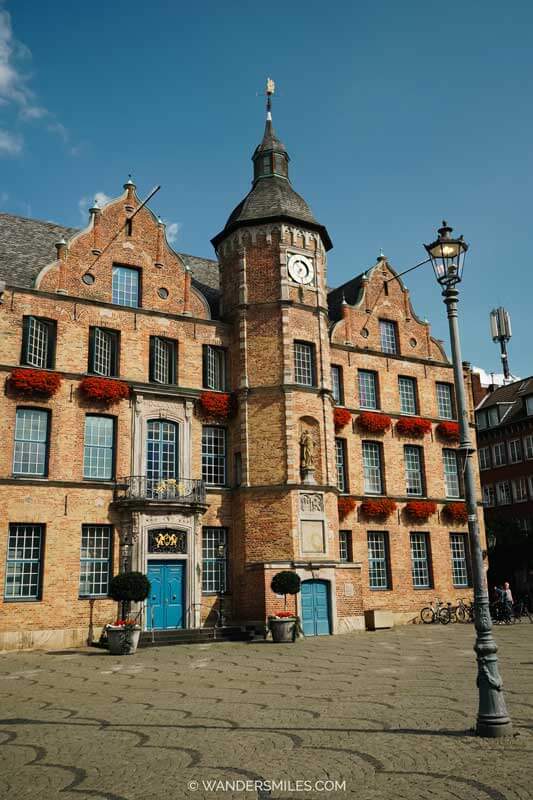
Instead of rushing through the city for a quick social getaway, take some time to explore Düsseldorf’s history. The city has evolved from a small medieval settlement along the Rhine into a major cultural and economic destination. Its historic centre, the Altstadt, has many narrow cobbled alleyways, centuries-old churches like St. Lambertus, and the iconic Rathaus (Town Hall), showcasing Gothic and Baroque architecture.
The Düsseldorf City Museum (Stadtmuseum) tells the story of the city’s development, from medieval times to its industrial growth and modern innovations. Visit the Maritime Museum and take a stroll along the Rhine promenade to imagine the centuries of trade and cultural exchange that made the city what it is today.
|| TOP TIP: Take a Historical Walking Tour by a Local or Guided Walking Tours and Audio Guides. Make sure you grab a DusseldorfCity Card for museum discounts and inclusive public transport
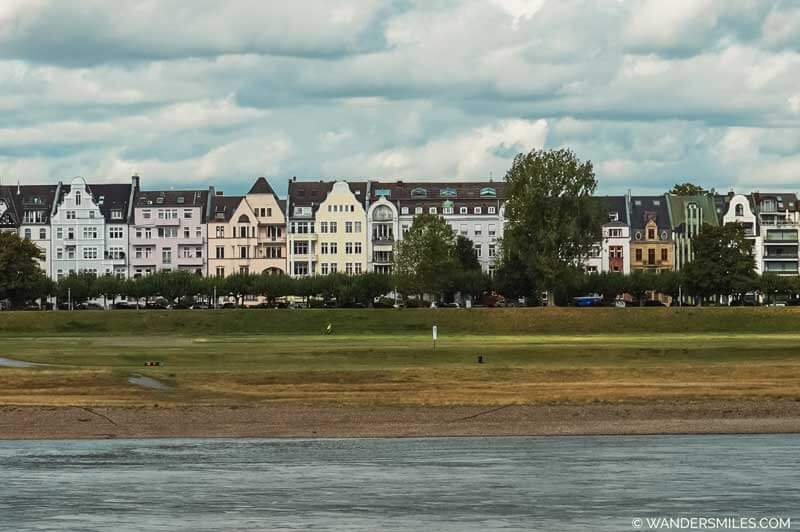
 Old houses in Oberkassel
 Jan Wellem Equestrian-Monument
- Town Hall (Ratthaus)
 Marimtime Museum (SchifffahrtMuseum)


Check Out The Altbier Culture in Dusseldorf
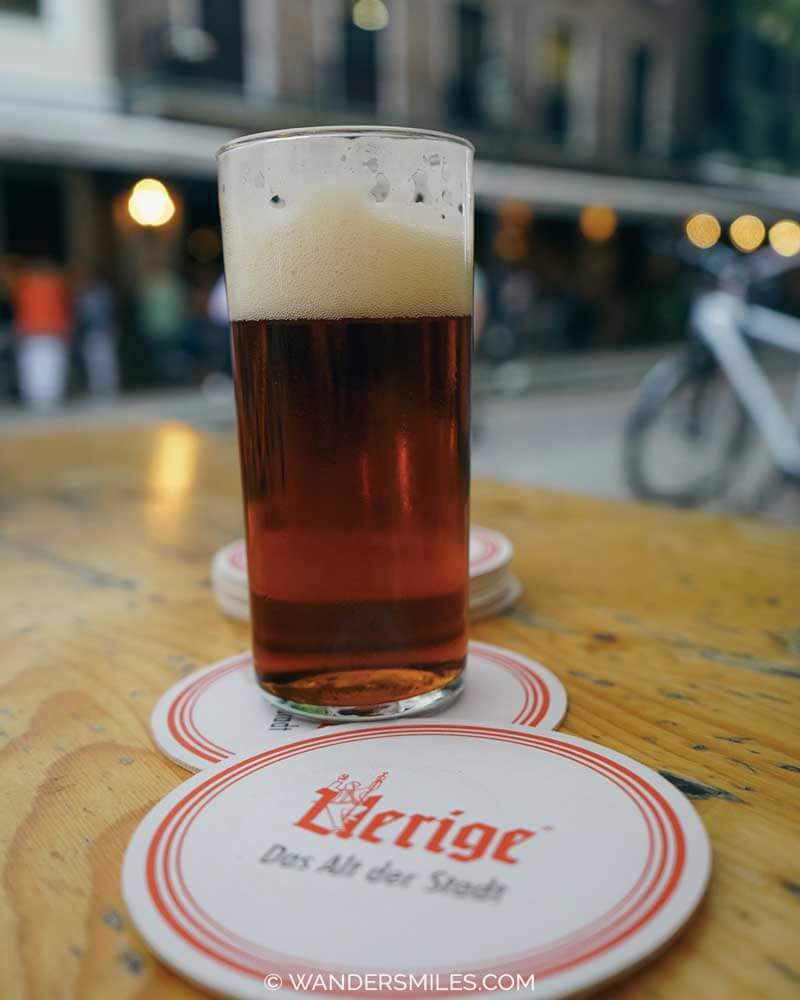
Düsseldorf is the birthplace of Altbier, a copper-toned beer is part of the city’s cultural identity. Unlike the lighter lagers that dominate Germany, Altbier is top-fermented, giving it a fuller body and a distinct, malty character balanced by gentle hops.
The best way to experience it is by stepping into one of the traditional Altbier breweries in the Altstadt. Places like Uerige, Füchschen, Schlüssel, and Schumacher on the Oststraße, serve their beer fresh from wooden barrels, carried through the crowd by waiters who replace your empty glass without asking unless you place a coaster on top. This ritual keeps the atmosphere buzzing, with small 200ml glasses encouraging conversation rather than overindulgence. Although, as a newbie in Düsseldorf, I had to ask how to make them stop coming!
|| READ MY GUIDE ON WHERE TO DRINK ALTBIER
- Altbier in Uerige Brewery
- Altbier in Schumacher

|| READ MORE GERMAN TRAVEL GUIDES FOR RESPONSIBLE TRAVELLERS: CHECK OUT BERLIN AND HAMBURG
Dine Organic Restaurants in Dusseldorf
Düsseldorf’s food scene has plenty of places that care about more than just flavour. You’ll find restaurants and bars that champion local suppliers and Rhineland farmers, family-owned spots with real character, and menus designed with seasonality and sustainability in mind.
Here’s a few eateries I experienced in the big “Dorf”;
- Takumi Ramen Kitchen started life in Little Tokyo and now serves steaming bowls of authentic Japanese ramen across Europe.
- Urban Gorillas is on a mission to make meat-free fast-food healthy. Join the plant-based revolution with cool murals as company — and the vegan bowls rock!
- Wilma Wunder bring tasty soul food to your plate. Their vegetarian Ziegenpeter Tarte Flambée melted in your mouth!
- Concept Riesling lets you enjoy a glass in Carlsplatz while pairing it with a treat from one of the market stalls — cheese was my choice!
- Feinkost Fladi has created the famous “fladi” flatbread packed with gourmet produce from the family-run deli in Carlsplatz.
- HeimWerk Restaurant puts a modern spin on German comfort food, serving schnitzels in many flavours (including a vegan option).
- Brauerei Schumacher, Düsseldorf’s oldest brewery, pairs its Altbier with hearty small plates like meatballs with mustard, melted gouda on rye, and goulash soup.
|| READ MY GUIDE ON LOW-IMPACT EATERIES IN DÜSSELDORF

Explore Dusseldorf’s green spaces
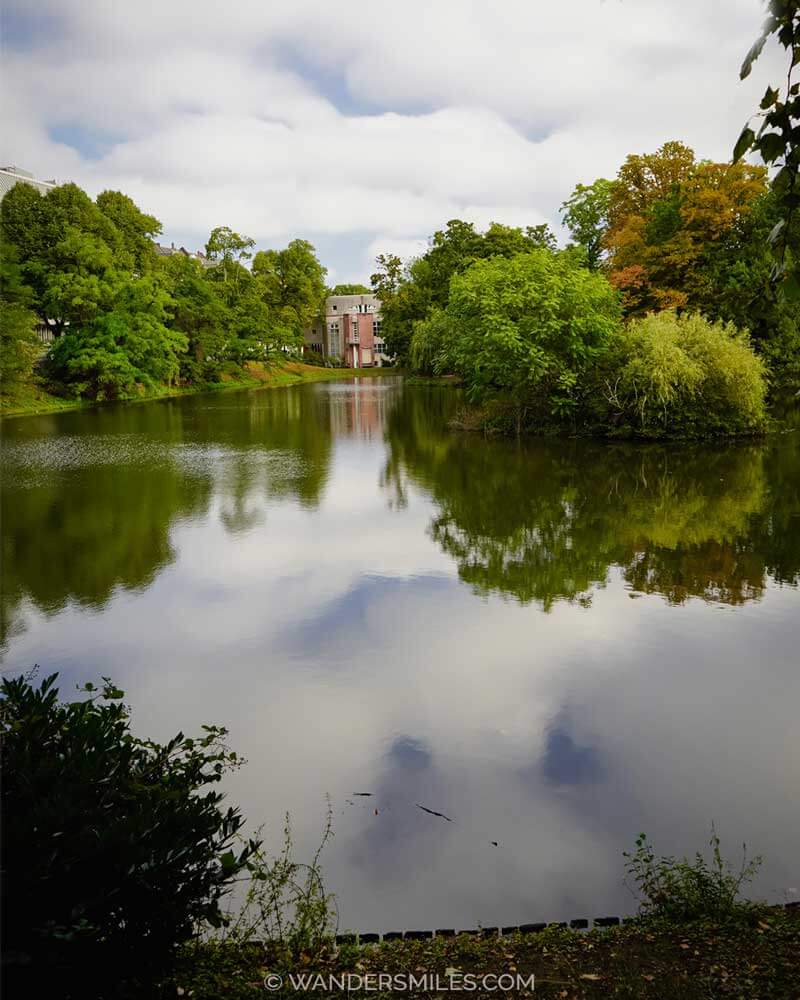
Düsseldorf surprises with its greenery, from parks and riverside paths to hidden urban gardens. Hofgarten, the city’s central park, is Germany’s oldest public park and a popular hangout for twitchers spotting Alexandrine parakeets, Australian swans and Canadian Geese.
Nordpark was created in the 1930s and features the tranquil Japanese Garden. Across the Rhine, EKŌ-Haus combines a traditional Japanese house, Buddhist temple, and garden, with workshops and tea ceremonies that allow a peek into Japanese culture. The Rhine promenade is a lovely stretch for cycling, walking, or simply enjoying river views — keep an eye out for the sheep grazing on the Rhine meadows by Oberkassel.
- Ständehauspark
- Australian Swan in Hofgarten

Visit Little Tokyo
Düsseldorf’s Little Tokyo has grown since the 1960s, when Japanese companies established offices in the city, creating one of the largest Japanese communities in Germany. You can’t visit Dusseldorf without visiting Little Tokyo, it’s now as integral to the city as Altbier.
Around Immermannstraße, you’ll find a lively mix of Japanese restaurants, bustling izakayas, fragrant bakeries, and shops selling maneki neko ceramics (Lucky Cats), stationery, and specialty teas. As day turns to night, there is to an explosion of activity Around Immermannstraße, you’ll find a lively mix of Japanese restaurants, bustling izakayas, fragrant bakeries, and shops selling ceramics, stationery, and specialty teas. As day turns to night, there is to an explosion of activity as queues of spill onto the pavements outside sushi bars and ramen kitchens, but the wait is well worth it for an authentic taste of Japan in the heart of Düsseldorf.
- Japanese Lucky Cats in Little Tokyo
- Takumi Ramen Kitchen in Little Tokyo


Experience Dusseldorf’s Art and Culture
Creativity runs through Düsseldorf’s veins. This innovation shows itself in many forms, from avant-garde fashion and renowned art galleries to eccentric architectural landmarks. While not all fall under the sustainable umbrella, they certainly help you understand the city and what makes it tick.
Art Galleries in Dusseldorf
Düsseldorf has long been a magnet for artists, from Otto Dix and Joseph Beuys to Gerhard Richter and Andreas Gursky. Their influence still remains, making the city one of Germany’s most exciting places to experience contemporary and modern art. With countless galleries, both public and commercial, spread across its districts, you can discover everything from experimental spaces to internationally recognised collections.
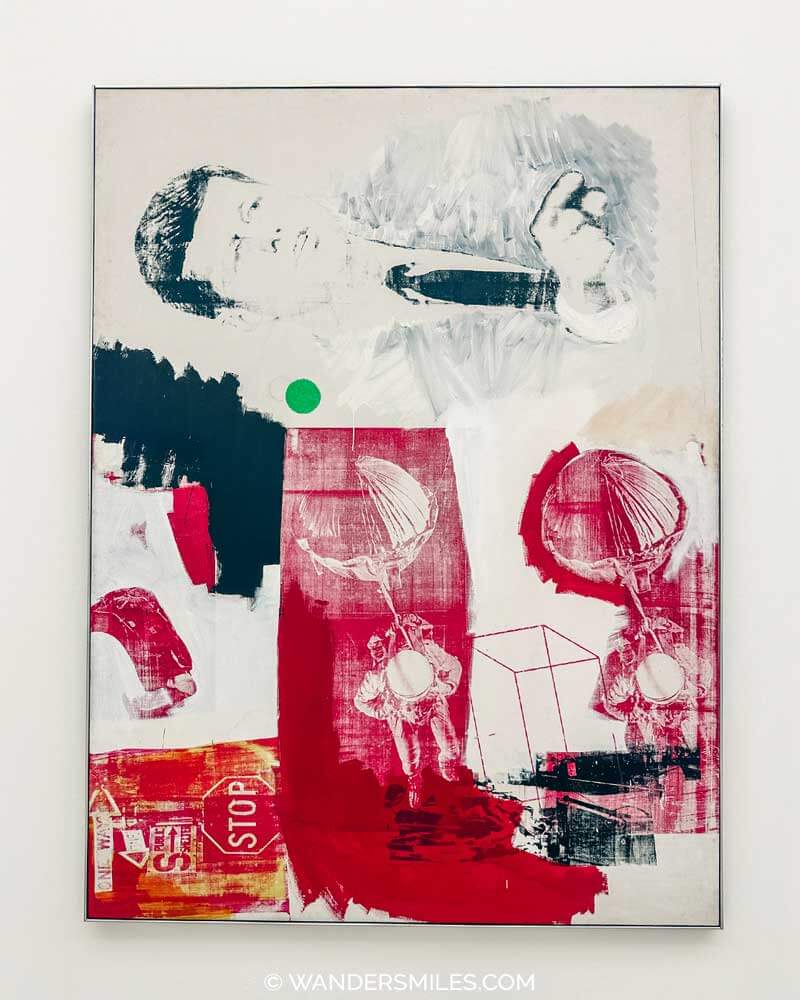
I managed to see some of Düsseldorf’s key galleries, but there were still plenty I wished I had time for. I began at the Kunsthalle Düsseldorf, where contemporary exhibitions fill a bold Brutalist building. At Kunstsammlung Nordrhein-Westfalen (K21 Ständehaus), large-scale installations take over a former parliament building crowned by a glass dome. For modern masters, the Kunstsammlung Nordrhein-Westfalen (K20 Grabbeplatz) is unmissable, with Picasso, Klee, Warhol, Matisse, and Rauschenberg all on display, supported by an engaging audio guide that explains each room’s themes. The Museum Kunstpalast spans everything from Old Masters to contemporary works, while the NRW-Forum concentrates on photography, digital culture, and exhibitions that push artistic boundaries.
|| GET A DUSSELDORF ART:WALK MUSEUM PASS
- Museum Kunstpalast. in Dusseldorf
- Robert Rauschenburg (Quote, 1964) at K20
- Hornet by Sarah Morris in Paul-Klee Platz


Street Art in Dusseldorf
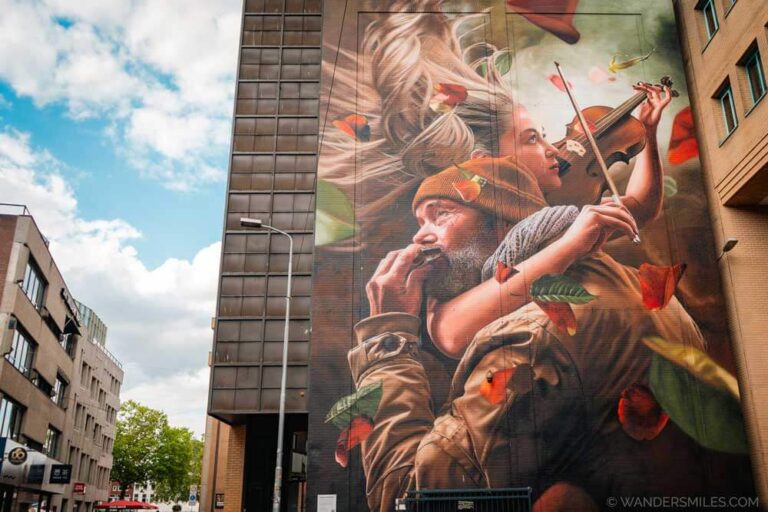
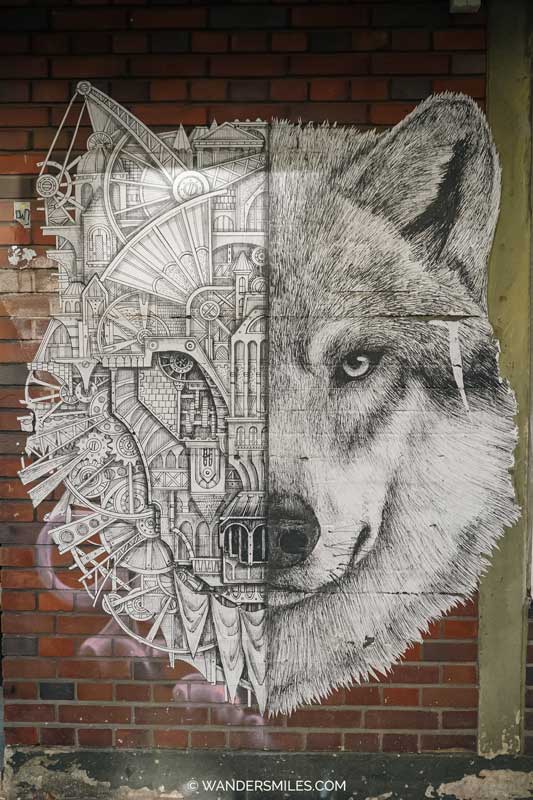
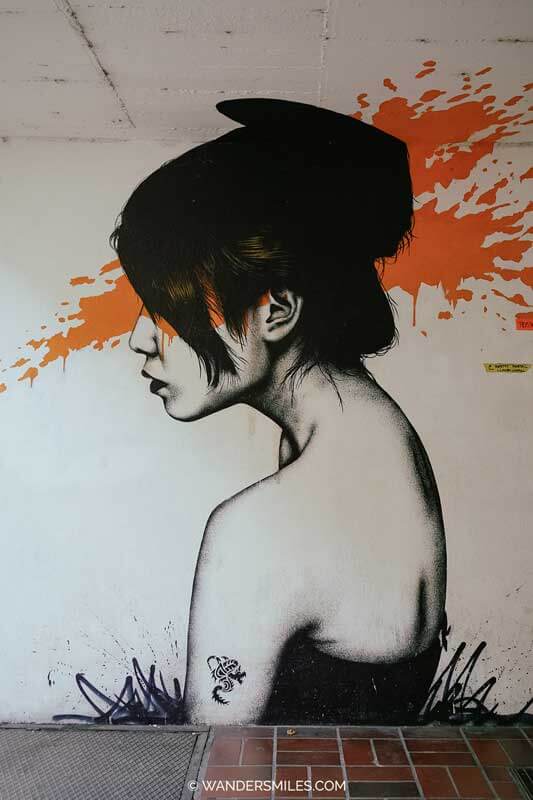
Düsseldorf doesn’t just shine with polished galleries — it’s also alive with colour on its walls, with murals scattered across districts like Bilk, Friedrichstadt, and Flingern.
In Bilk, disused factories and residential blocks have become canvases for local and international artists. The Bilker Bunker, once a wartime air-raid shelter, now stands as a creative centre with exhibitions, studios, and club for DJ nights and events. Pop into Pretty Portal gallery, not only have they have played a big part Düsseldorf’s street art culture, you can see art hung on the walls. I was lucky enough to see and chat with Oliver Räke aka MAGIC painting a chrome-style piece in their back yard.
Wander through Kiefernstraße, a street in Flingern-Süd once known for squatters and protests, now transformed into a colourful open-air gallery where buildings burst with paint and personality. However, there are random pieces that will surprise and delight you as you explore the city.
If you want a more structured look, join a street art tour, where guides will point out hidden stencils, large-scale works, and explain the politics, humour, and messages behind them.

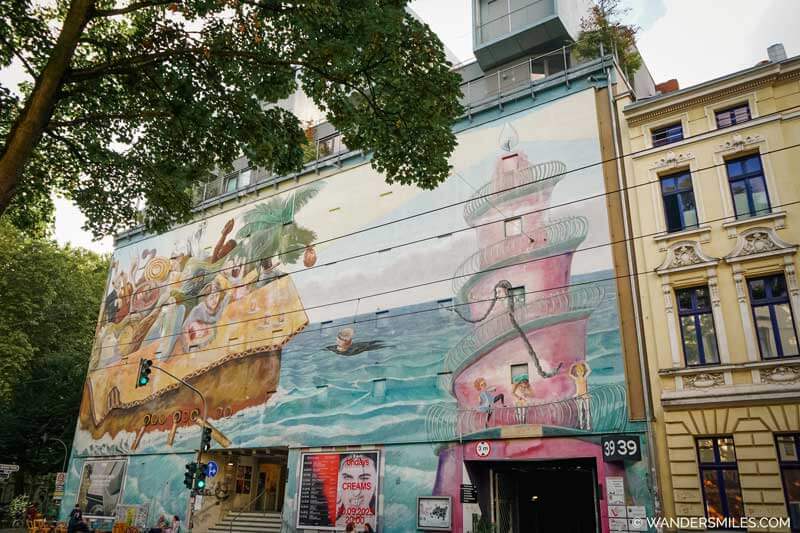
Art on the Wehrhahn line
The Wehrhahn Line in Düsseldorf is more than just a U-Bahn route — it’s a moving gallery accessible to everyone. All six stations along the line feature curated art, from contemporary sculptures to vibrant murals, transforming a simple commute into a cultural journey. To get more involved, the 90-minute underground art tour explores what the New York Times called “Art and Magic in a German Metro.”

Discover the Architectural Gems in MediaHafen
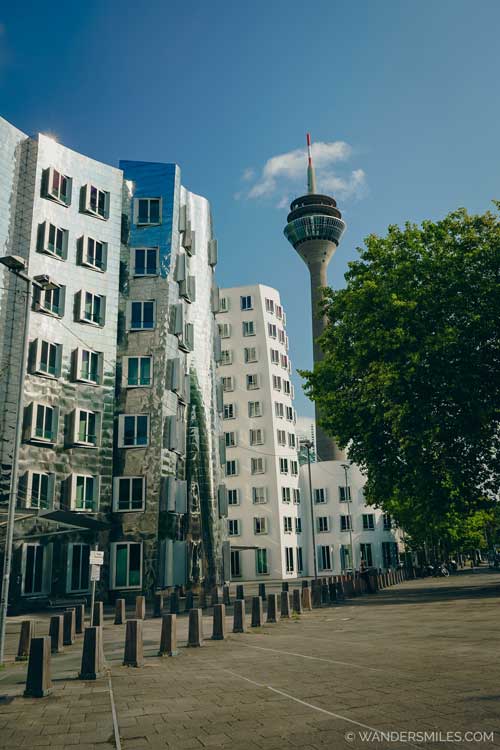
Once a working harbour, Düsseldorf’s MediaHafen has transformed into one of the city’s most contemporary districts. Old warehouses now sit alongside modern architecture, creating a skyline epitomises innovation and regeneration. Strolling through the harbour across the Living Bridge, you’ll find some of truly iconic buildings and landmarks, against the backdrop of the Rhine.
Architectural highlights to see in Düsseldorf’s MediaHafen:
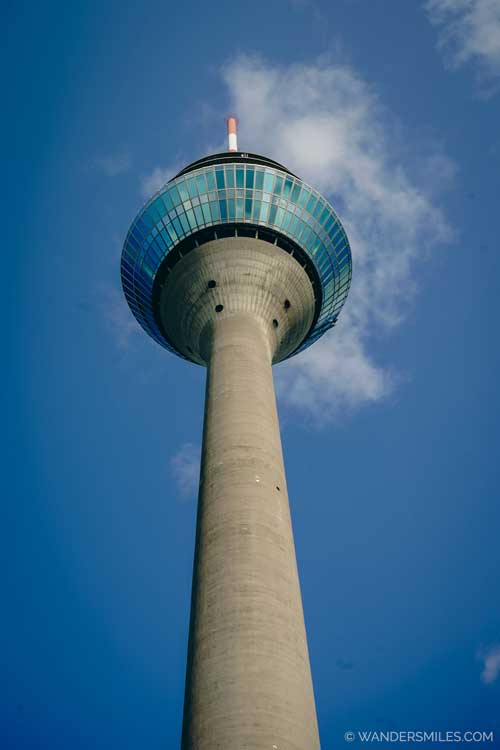
- Rhine Tower (Rheinturm): The city’s tallest landmark with panoramic views from its observation deck.
- Gehry Buildings (Neuer Zollhof): Three deconstructivist masterpieces by Frank Gehry with twisting lines and contrasting façades.
- Colorium: A colourful glass tower designed by British architect William Alsop, decorated in 17 colours.
- The Cradle: The first timber hybrid office building in the city, designed with sustainable rhombic-shaped structure, and uses recyclable materials.
- Landtag (State Parliament): A modern riverside complex housing North Rhine-Westphalia’s parliament.
|| TAKE A MEDIAHAFEN + RHINE TOWER TOUR || GET TICKETS FOR THE RHINE TOWER
 Gehry Buildings in Dusseldorf
- The Rhine Tower
- Old and new architecture in MediaHafen

Cultural Events in Dusseldorf
Düsseldorf’s cultural calendar is full of events that showcase the city’s energy and diversity. The highlight is Carnival, known locally as the “fifth season,” when parades, costumes, and street parties take over the city in February. In spring, Japan Day celebrates Düsseldorf’s strong Japanese community with food stalls, cultural performances, and a spectacular firework display over the Rhine. In December, Düsseldorf comes alive with seven themed Christmas markets, where wooden stalls line the squares offering mulled wine, festive treats, and handmade gifts, all adding to a warm and inviting winter atmosphere with LED fairy lights.
Music lovers also have plenty to look forward to. Düsseldorf hosts many music festivals and concerts that bring some of the most sought-after names in electronic, indie, and experimental sounds. Classical music has its stage too, with the Schumann Festival honouring the composer’s legacy each June.
|| CHECK DUSSELDORF’S EVENTS CALENDAR
Shop Sustainably in Dusseldorf
Eco-shopping & Concept Stores
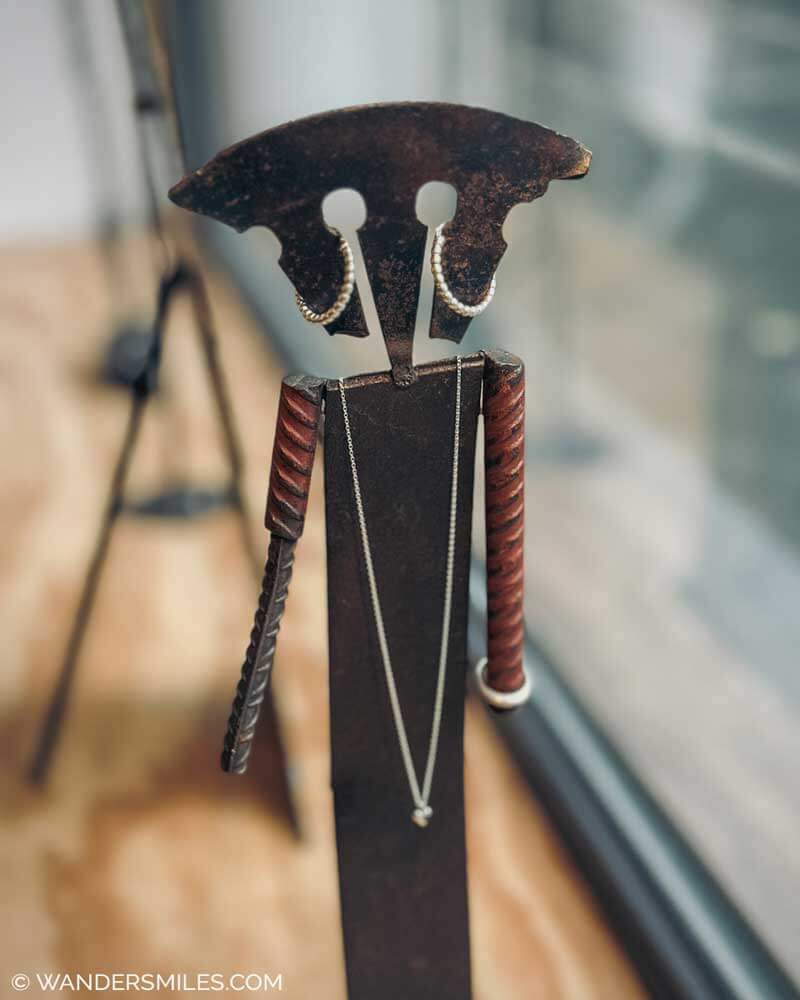
If you love browsing independent shops while you travel, Düsseldorf won’t disappoint. The city has a growing mix of eco-conscious boutiques and vintage stores that put people and planet first. A great place to start is COSH!, a platform that highlights sustainable shops, products, and events across the city. It’s a useful resource if you want to make thoughtful choices during your trip. I used it to track down some of Düsseldorf’s best eco-stores — here are a few I checked out in Flingern.
- ERDEN, the brainchild of Freida, where you’ll find handcrafted jewellery made from recycled gold, silver, and ethically sourced gemstones.
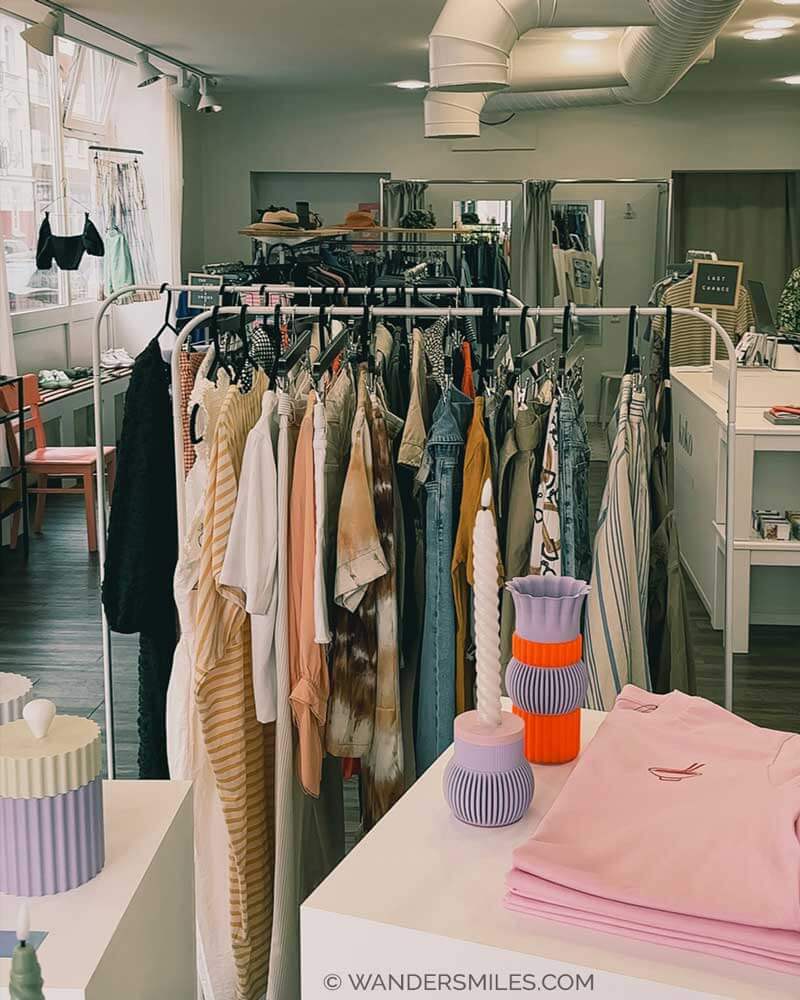
- Koko Selected is a beautifully curated concept store where you’ll find second-hand treasures, upcycled items, and sustainable brands with a story.
- Green Guerillas leans towards stylish brands who favour fair trade over fast fashion.
- ERDEN Goldsmiths store
- KOKO Selected Store
Handy Links for Düsseldorf City Guide
- Get train times and prices
- Compare flight prices to Düsseldorf
- Find the best hotels in Dusseldorf
- Get incredible car hire comparison quotes
- Find day trips and multiday tours on GetYourGuide or Viator
- Travel Insurance: 5% Off HeyMondo + Safetywing
Thank you to #VisitDuesseldorf for supporting me on my mission to write a Düsseldorf City Guide for responsible travellers. This itinerary was researched by myself. All opinions are my own.
PIN My Düsseldorf City Guide

Disclosure: This post contains affiliate links, which means I may receive a small commission if you click a link and purchase something that I’ve recommended. It comes at no cost to you. Thank you for your support.