
Best Bruges City Guide for Responsible Travellers
LAST UPDATED: 19th August 2026 | ORIGINAL: 29th July 2026
Bruges, the ancient capital of West Flanders, is one of those rare cities that manages to be both wildly popular and genuinely worth the hype. This Bruges city guide will help you plan your itinerary with responsible travel in mind.
The city of Bruges has a bit of a split personality. On one hand, it’s the fairy tale everyone promises you with cobbled lanes, swans gliding along canals, and chocolate shops everywhere you look. On the other hand, it gets a steady stream of day trippers who snap a few photos in the UNESCO historic centre and leave before dinner.
If you want to see the real Bruges, the answer is simple. Take your time, and spend your money where it actually helps the city rather than just passing through it. I spent four days in Bruges, and not only did it win me over, but I also realised that with a well-planned itinerary, it can feel surprisingly relaxed. Let’s be honest, Bruges is a beautiful city and well worth more of your time.

For any new readers landing here, I’m Vanessa, and my series of sustainable city guides are all about helping travellers explore urban spaces more mindfully. I share my own experiences on the ground, along with tips on local history, culture, legends, greener ways to get around, and independent places to eat, shop, and stay, so you can enjoy a destination while being a bit more considerate about the impact you leave behind.
In this Bruges city guide, you’ll learn how to explore Belgium’s sixth-largest city more thoughtfully with bags of handy tips and information on
- sustainable transport
- locally sourced meals and organic cuisine
- best ‘green’ places to stay
- the best activities in Bruges, from cycling to craft breweries
- how to plan your trip and avoid crowds
MY TOP TIPS: If you’re planning to visit Bruges, don’t miss a day trip to Damme. Or extend your trip to stay in Ghent and experience the thriving beer scene in Ghent. I recommend checking out my 1 Day in Brussels as you may pass through the capital.
How sustainable is Bruges as a city?
Bruges is making a fairly solid effort when it comes to sustainability, particularly in urban mobility, food waste reduction, and tourism management. The city has spent decades moving away from car-first planning, with pedestrian-priority areas, cycling infrastructure, managed parking, Park & Ride options, and good public transport links all helping visitors get around with less impact.
The city has developed a more sustainable food strategy and backed practical initiatives to tackle waste. One example is Food Winners Brugge project, which focused on reducing food waste across different sectors, including retail and healthcare, while also encouraging more circular habits at the household level.
Bruges’ wider climate plans sit under the long-term Brugge Naar Morgen (Bruges Towards Tomorrow) strategy, which aims to halve local CO2 emissions by 2030 and includes projects such as Blue4Green and Re-Value to make the city and its waterways more climate resilient. So while some of this work is more municipal than tourist-facing, there is clearly more going on behind the scenes than just a few bike racks and a recycling bin.
Bruges also seems more aware than many pretty European cities of the risks of being loved a little too enthusiastically. The city uses data-driven tourism tools such as the Urban Sense platform and real-time mobile data counting to monitor visitor flows, while measures such as limits on cruise arrivals and tour groups capped at 20 people suggest it is at least trying to manage overtourism rather than simply cash in on it.
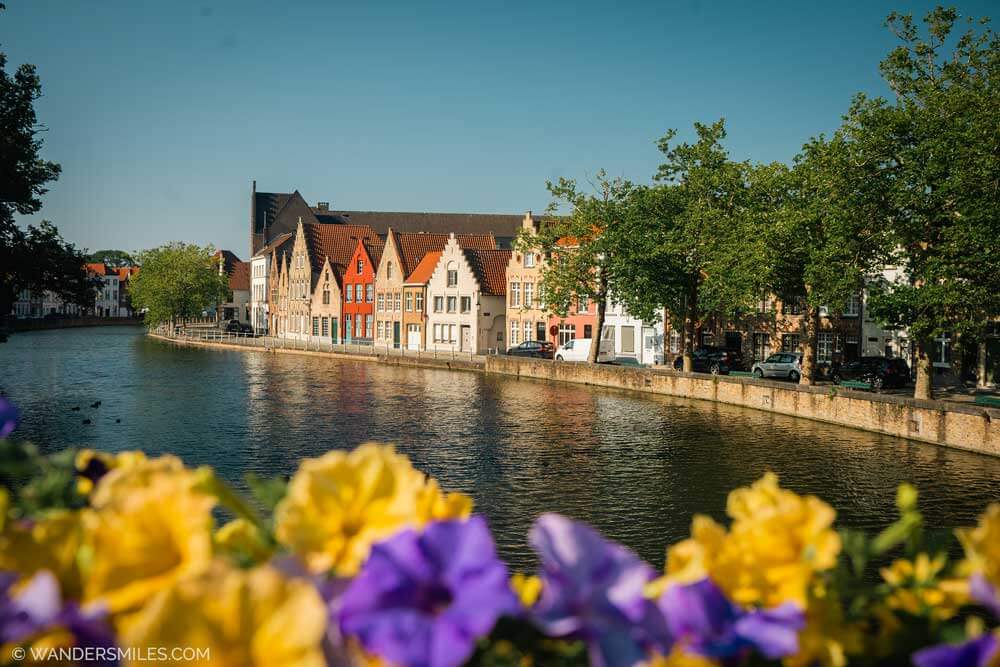
How to Plan a Trip to Bruges Sustainably
Book Green or Locally Owned Hotels in Bruges
Skip the one-day whirlwind trip. Stay for longer and let your tourist dollar land where it belongs, in Bruges itself, rather than in a coach company’s pocket. I stayed at the family-owned Hotel Jan Brito, a beautifully restored 16th-century house tucked right in the heart of the city. Independent, characterful, and proof that sustainability doesn’t have to mean sparse.
 Courtyard garden at Hotel Jan Brito
- Junior Suite Bedroom at Hotel Jan Brito


How To Reach Bruges Sustainably
Bruges has excellent train and bus connections. You can arrive comfortably and get dropped close to the historic centre with a fraction of the carbon footprint of a plane or car journey.
By Train
- From Brussels: Bruges is about 1 hour from Brussels by train. Trains depart frequently from Brussels Midi, Brussels Central, and Brussels North stations to Brugge station.
- Within Belgium: Bruges is well-connected to other cities, including Ghent (30 minutes), Antwerp (1 hour 30 minutes), and Leuven (1 hour 30 minutes).
- From Other European Cities:
- Paris: Take a high-speed Thalys or TGV train to Brussels and transfer to a local train to Bruges.
- London: The Eurostar connects London to Brussels in about 2 hours, then takes a direct train to Bruges.
- Amsterdam: Use the Intercity Brussels train, which takes about 3 hours with a transfer to Antwerp or Brussels.
By Bus
Long-distance bus companies like FlixBus and BlaBlaBus connect Bruges to other European cities. The bus station is near Brugge station or at nearby designated stops.
|| YOU MAY LIKE TO CHECK ROUTES WITH OMIO

Best time to visit Bruges
There is no bad time to visit Bruges, but some seasons suit it better than others. Summer is the busiest, with the biggest crowds and highest hotel demand. Spring and autumn are also popular and usually feel a bit more manageable, with pleasant weather and fewer people than peak summer. December is another busy period because of the Christmas markets and festive atmosphere.
So the best time really depends on what you want. Summer for long days, spring for blooms, autumn for amber foliage, and December for festive fun. If you can, visit outside the peak summer crush to be kinder on the city’s infrastructure and its residents.

Getting Around Bruges Sustainably
Is Bruges a walkable city?
Once you’re there, getting around is refreshingly easy. The whole old town is compact enough to explore on foot, and bikes are everywhere for slightly longer hops or lazy afternoon rides along the canals.
Is Bruges accessible?
While Bruges is very walkable, but it is not always the easiest city to navigate if you have additional access needs. Cobbled streets, uneven pavements, and historic buildings can all make getting around more challenging.
That said, Visit Bruges provides practical accessibility information to help with planning, including self-guided walking tours, accessible toilets, parking, museums, and restaurants. There is also a brochure designed for visitors with visual impairments, which is a helpful extra resource before your trip.


Bruges City Guide Map
Although I couldn’t visit everything on my must-see list in my Bruges city guide due to limited time, I’m excited to share my research to help you plan your own trip. I hope this map of things to do in Bruges proves to be a handy resource for you to navigate the city easily.
CLICK TO VIEW THE MAP OF THINGS TO DO IN BRUGES
Best Things To Do in Bruges (as a Responsible Tourist)
Discover the history of Bruges
To really understand a city, you need to understand its history, not just walk past it. And Bruges has more history than most, though maybe not quite as old as the postcards would have you believe.
Roman and Gallo Roman outposts existed along the coast nearby back in the 2nd and 3rd centuries, but the Bruges we recognise today really began life as a 9th-century Frankish fortress, built to keep Viking raiders at bay. That famous fairy tale look everyone comes for is largely thanks to a booming 12th to 15th-century golden age, topped off with a good dose of 19th-century neo-Gothic restoration.
For a closer look, there are some excellent museums to explore, including the Gruuthusemuseum, Historium Bruges, Saint John’s Hospital, the Volkskundemuseum, and BRUSK.
One of the best ways to bring a city to life is through a local guide, and I had a brilliant afternoon with Nick from Nostalgic Tours. They only work with local guides, and it shows. Expect plenty of knowledge about food, history, and culture, plus a few very good stories about what it’s actually like growing up in Bruges.

Experience the Art and Culture in Bruges
Art Galleries in Bruges
For art lovers, the newly opened BRUSK tells the stories of strong women, pilgrims, and the foreign influences that shaped the city over the centuries. And no visit is complete without the Groeninge Museum, home to some genuinely world-class paintings from Flemish masters. Don’t miss seeing the triptych of Mystical Marriage of Saint Catherine by Hans Memling, shown in the medieval St John’s Hospital (Museum Sint-Janshospitaal).

Cultural Events in Bruges
Bruges has a busier cultural calendar than you might expect, from rock concerts to atmospheric projections lighting up the belfry after dark. It’s always worth checking what’s on before you go.
|| CHECK WHAT’S ON IN BRUGES TO PLAN YOUR TRIP
- Projections on Bruge’s belfry tower
- Burgrock free festival in Bruges


Shop Sustainably in Bruges
If you want your spending to do a little good while you are in town, Bruges makes that pleasantly easy. Rather than filling your bag with generic souvenirs that could have come from absolutely anywhere, you can support the people who actually make, bake, brew, design, upcycle and sell things locally.
Handmade in Brugge & Local Love
The Handmade in Brugge label is a handy one to know about. It highlights genuine local makers and artisans, from traditional lace and ceramics to bag designers, small-batch chocolate producers, and craft brewers. In other words, it helps separate the truly local finds from the more forgettable tourist tat.
If shopping is part of your travel planning, you can browse the full list of makers ahead of time and map out a few stops before you arrive. It is a great way to discover small studios, workshops, and independent shops you might otherwise walk straight past. I loved meeting the designer and maker at Leather Be in her shop and studio, being mesmerised by the tapping of the bobbins at the Lace Centre, drooling as the chocolatier at Chocolaterie Sukerbuyc reeled off the flavours, and happily tucking into a seasonal cherry-topped waffle at Otto Waffle Atelier.
If you want to take the local-love mission a step further, keep an eye out for Shop Local decals in windows around town. These mark businesses that are part of Bruges’ local economy and include not just shops but also restaurants, cafes, and bike hire spots.
|| BROWSE LOCAL ARTISANS ON THE HANDMADE IN BRUGGE WEBSITE


Go hunting for vintage and antiques
Bruges also has an appealing vintage and antique scene, with small shops and retro spots a few streets away from the busiest crowds. Hoogstraat and lead into Langestraat around the Sint-Anna Quarter are good places to keep your eyes peeled, especially if you enjoy furniture, curios, vinyl, old prints, glassware, or decorative pieces with a bit of history to them.
Browse Bruges’ markets
Farmers’ markets are one of the easiest ways to tap into local life while picking up fresh, seasonal produce. You will generally find market activity around central squares such as Markt (Wednesdays) and ‘t Zand (Saturdays), where locals come to shop for flowers, fruit, vegetables, cheese, and other everyday essentials.
The Dijver Folklore Market, held on weekends from March to November, is a particularly good one to browse. What makes it different from a typical second-hand market is its official folkloric status: under Belgian rules, sellers can only offer items that are at least 50 years old or handmade by a recognised artist. In other words, you are far less likely to find the cheap bric-a-brac mixed in among the stalls.


Dine Organic Restaurants in Bruges
Bruges is full of small, independently run places where eating well and eating responsibly go very nicely together. Many focus on seasonal produce, local suppliers, and a more thoughtful way of dining, so it is not hard to find a meal that feels good in every sense. Here are three places worth seeking out.
Rocolte
Rocolte is a couple-run cafe with a real focus on seasonal cooking and local produce. The weekly three-course lunch menu is posted online and built around what is fresh and available, with plenty of care going into the ingredients. The serene garden oasis is a joy on sunny days, while the interiors have a warm, homely feel when Bruges decides to turn grey.
Bistro Den Amand
Just a few steps from the Markt, Bistro Den Amand is run by husband-and-wife team Chef An and host Arnout. The food leans into hearty Flemish fare, with a focus on honest cooking and support for local brewers, bakers, and farmers. There is indoor and outdoor seating, plus an open kitchen that does a very effective job of making everything smell far too tempting.
Atelier Flori
Atelier Flori is another couple-owned favourite and a great pick if you are after more of a neighbourhood-cool vibe as it this eatery doubles up as an art gallery and wine bar. It is laid-back but stylish, and the food comes in the form of creative, delicious vegan tapas, making it a fun place to share a few plates and try something a little different. It is also award-winning and popular, so booking ahead is a very sensible move.


Get a Taste of Brewing Traditions in Bruges
Belgium and beer are a very good pairing, and Bruges has the brewing history to back it up. Belgian beer culture was even recognised by UNESCO in 2016 as part of the Intangible Cultural Heritage of Humanity, which tells you just how seriously the country takes this thirst-quenching tradition.
If you want to explore that side of Bruges, Fort Lapin, De Halve Maan, and Bourgogne des Flandres are the brewery names worth knowing. I only visited De Halve Maan and Bourgogne des Flandres, though, as they are the more central options and the easiest to fit into a wander around the city.
Visit Brewery De Halve Maan
Brewery De Halve Maan has been in the hands of the same family for six generations and has received the ‘Handmade in Brugge’ label. Their story stretches back to the 19th century, although brewing on the site goes back even further.
It is best known today for beers like Brugse Zot and Straffe Hendrik, and their tour gives a good mix of brewing history, family story, and behind-the-scenes insight. You also get the fun tale of the underground beer pipeline, built to transport beer out of the centre without sending delivery trucks rumbling through Bruges’ old streets.
Stop by Bourgogne des Flandres
The story of Bourgogne des Flandres goes back to a farm brewery in Loppem in 1765. It moved into Bruges in the 19th century under a different name, and its signature blend was created just before the First World War. The original brewery eventually closed, but the beer survived and was later taken on by Timmermans, the world’s oldest lambic brewery, helping keep this piece of Bruges brewing history alive and kicking.
Bourgogne des Flandres offers a different take on Bruges’ beer heritage, with its revived historic blend and distinctive sweet-sour style. The brewery visit is a little more modern in feel but still gives plenty of context on the city’s brewing past and the beer-making process. The canal-side setting does not hurt either.
Have a Drink at Café Vlissinghe
While Café Vlissinghe is not a brewery, it absolutely deserves a place in Bruges’ beer story. It is the city’s oldest continuously running brown café and one of the oldest pubs in the world, with written records dating back to 1515.
Do not let that fool you into expecting untouched medieval interiors, though. The café was renovated in the 19th century after being taken over by local brewer Leon De Meulemeester, who gave it a Flemish Renaissance makeover, added antique furniture, and filled the walls with rather serious-looking portraits. It also became something of a creative hangout for local artists, sculptors, and actors.
The inside felt a little dark on a sunny day, so I was very happy out in the beer garden instead, watching locals play krulbol, a traditional Flemish game, while sipping a Belle Vue Kriek, a sweet cherry lambic.
Visit Bruges Beer Experience
Bruges Beer Experience is a museum in the heart of the city that allows you to smell and touch ingredients in a fun and interactive way. This attraction introduces visitors to Belgium’s brewing culture. Rather than being a brewery itself, it takes you through the history of Belgian beer and brewing process, and the traditions that have made beer such an important part of local identity. It is a good stop if you want to understand the story behind what you are drinking in Bruges, especially before heading out to sample a few local beers in the city’s bars and cafes.
=> BOOK TICKETS TO BRUGES BEER EXPERIENCE
- Bruinen Os (Brown ale) at ourgogne des Flandres Brewery
- Brugse Zot at De Halve Maan
- Belle Vue Kriek at Café Vlissinghe


Explore Bruges’s green space
Finding a bit of water, greenery, and breathing room in Bruges is wonderfully easy. Wander along the calm canals, pause by the windmills, or claim a bench in one of the city’s prettiest parks when the sightseeing speed needs dialling down a notch.
Spend time in Bruges’ parks
Bruges has several lovely green spaces that are perfect for a stroll or a sit-down. Koningin Astridpark began life as a 13th-century Franciscan monastery garden, while Minnewater Park is home to the famous Lake of Love and has a long history tied to the city’s medieval waterways, and Koning Albert I-park, built on the site of Bruges’ former 19th-century railway station.
Walk by the windmills
Bruges still has four historic windmills standing along the eastern edge of the old town on the grassy rampart path known as Kruisvest. You will find them near the Sint-Annakwartier and close to the medieval Kruispoort city gate. It is a lovely walk and feels like a completely different side of Bruges.
Wander beyond the main Canals
One of the nicest things about Bruges is how quickly it quietens down once you move a few streets away from the tourist areas. Suddenly, the city feels calm and local again, with tranquil canals that are perfect for whiling away an afternoon, stopping for coffee (or a Belgian beer). Sometimes the best plan is simply to stroll and let Bruges do its thing.
- Neptune fountain, Koningin Astridpark
- Sint Janshuis Mill


My Tips on Avoiding the Crowds in Bruges
There is no getting around it: Bruges gets busy. Day-trippers arrive in big numbers, especially in the historic centre, where walking tours and boat tours tend to cluster. The good news is that the crowds are fairly predictable, so if you stay overnight in Bruges, which I definitely recommend, it is quite easy to plan around them. Here are my top four tips.
Get into the historic centre early
Most day-trippers arrive by train or coach and usually make their way into the centre at around 10am. If you head out earlier than that, you can enjoy the canals and cobbled streets while they still feel tranquil and almost empty. I was out at 6.30am to catch the morning light on the buildings and only spotted a few fellow photographers doing exactly the same thing.
Book the earliest museum and attraction slots
If you are planning to climb the Belfry or visit Bruges’ museums, go for the earliest time slot you can get. Opening times vary by season and attraction, but most places open between 9am and 10am. I visited the Belfry at 9am during a heatwave, and by the time I came back down, staff were warning that they might stop letting people in if it got too hot. Moral of the story: earlier is always better.
- Rozenhoedkaai at 7am
- Adornes Domain at 11am


Explore the quieter neighbourhoods
A lot of visitors barely venture beyond the main squares, which means serene neighbourhoods stay delightfully overlooked. The Visit Bruges Route App is useful for finding more peaceful hangouts such as the Sint-Anna Quarter, where you can discover Adornes Domain, Lace Centre and the Folklore Museum.
Visit villages and towns around Bruges
If the centre starts to feel a little too lively, escape for a few hours and explore somewhere nearby. Damme, Lissewege, and Loppem Castle all make excellent day trips. I cycled along the canal to Damme, though you can also hop on the Lamme Goedzak boat, and it turned out to be one of the most charming little Flemish towns I visited.
|| RELATED READ: BEST DAY TRIP IN DAMME

Quick Links for Bruges Trip Planning
- Discover FREE walking tours with locals
- Find the best day tours in Bruges
- Explore hassle-free, multi-day private and group tours
- Find great deals on affordable hotels and quirky hostels
Thank you to #VisitBruges for supporting me on my mission to write a Bruges city guide for responsible travellers. All opinions are my own.
PIN This Bruges City Guide


Disclosure: This post contains affiliate links, which means I may receive a small commission if you click a link and purchase something that I’ve recommended. It comes at no cost to you. Thank you for your support.






Thanks for sharing this. I’m hoping to visit Bruges next year, this post will be helpful
I hope you have the best time. Bruges is a wonderful city to explore, and feel free to ask me any questions.