
3 Days in Dorset: Pretty Villages and Sea-carved Coastline
LAST UPDATED: 23rd October 2026 | ORIGINAL: 13th April 2024
Discovering Dorset: A three-day adventure that seduces you with picture postcard landscapes, rugged bays and English history.
Dorset is a county where time-honoured history is hugged by rolling hills and flourishing woodlands, a region in southwest England that begs to be explored.
So when the chance to spend 3 days in Dorset arose, saying no simply wasn’t an option. With a passion for nature, history, and adventure, I set out to uncover the region’s most unforgettable experiences, from craggy cliffs and fossil-strewn shores to quintessentially English market towns.
With a few days to explore the highlights of days out in Dorset, I crafted a plan with a little bit of everything I love. I hope you enjoy my Dorset 3 day itinerary!
DAY ONE IN DORSET: Wimborne + Cerne Abbas
Knowlton Church
Knowlton Church and Earthworks is an English Heritage site built in the 12th century and is said to be one of the most haunted places in Dorset. This Norman church is surrounded by Neolithic earthworks, associated with prehistoric rituals. Thankfully, I did not hear ghostly figures or whispering voices!
|| Knowlton Church opens all year | Free to enter | LOCATION

Sturminster Newton Mill
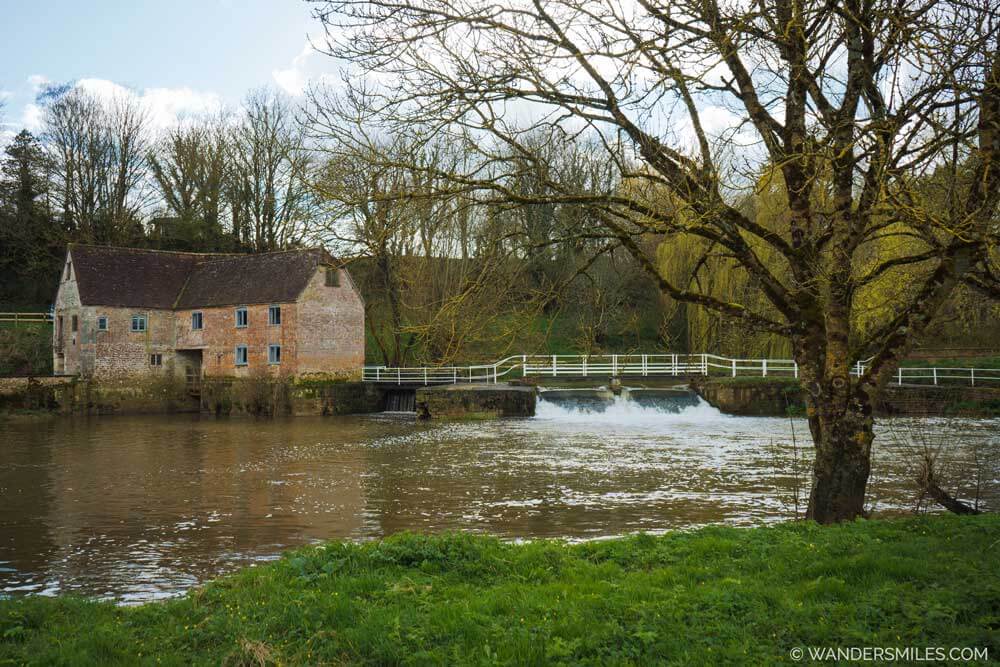
Sturminster Newton Mill sits on the River Stour with a legacy dating back to Saxon times, with mention in the Domesday Book of 1086.
The present structure, an L-shaped building, comprises the south and north wings, the former rebuilt around 1650. Originally separate, the north wing, added in 1611, was later integrated with the grain mill. This is still a fully operational water mill, and you can even buy the flour made with this impressive industrial machinery.
In 1876-78, Thomas Hardy lived in Riverside Villas overlooking the Mill, where he wrote “The Return of the Native.” He later recalled this time as his happiest, describing idyllic nights rowing on the River Stour.
Other points of interest are the Sturminster Newton Museum (currently under renovation), the ruins of Sturminster Newton Castle and the remains of Fiddleford Mill. There is a Farmers’ Market on the 1st Saturday of the month.
|| Sturminster Newton Mill opens on the last weekend in March to the end of September | Fee to enter | LOCATION
Cerne Abbas Giant
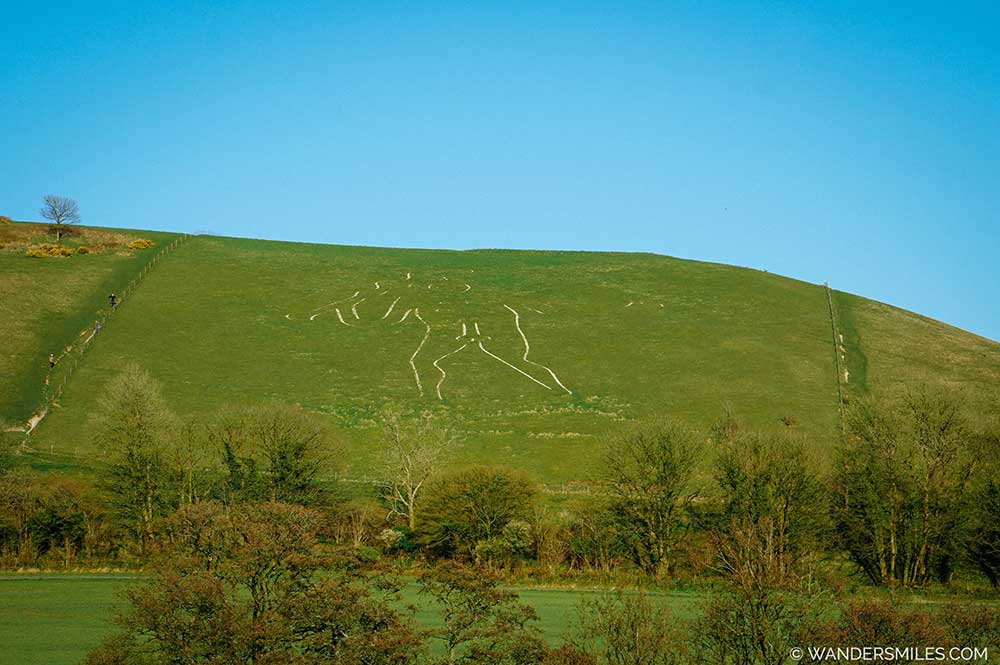
The Cerne Abbas Giant, a colossal naked figure wielding a club, is carved into the chalk hillside near the village of Cerne Abbas. Standing at 180 feet tall, it is Britain’s largest, and most famous, chalk hill figure.
The origins and purpose remain shrouded in mystery. However, it is believed to be a symbol of fertility and spirituality that was possibly constructed in the late Saxon period.
The National Trust viewpoint has around 10 spaces to see the mighty Cerne Giant.
Cerne Abbas is a quintessential village with old cottages, a Benedictine abbey, and historic English pubs. The best stopping point if you are walking the Cerne Valley Trail.
|| Cerne Giant Viewpoint is open all year | Free car park | LOCATION
DAY TWO IN DORSET: Jurassic Coast
Lulworth Castle
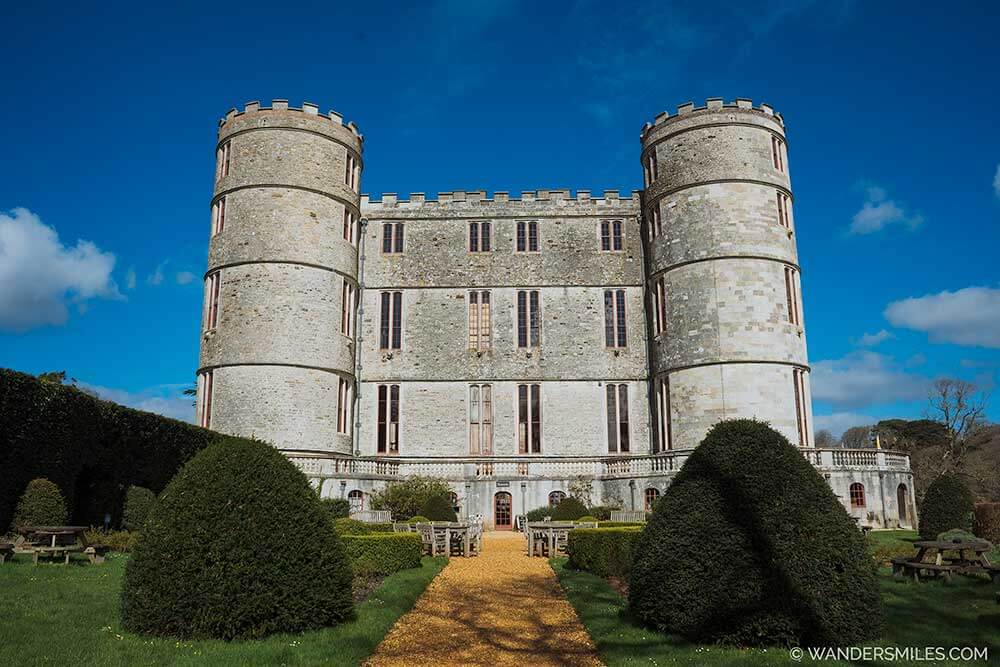
Lulworth Castle was built in the early 17th century as a hunting lodge, the castle has a storied past, having served as a royalist stronghold during the English Civil War and later transformed into a lavish country residence with turrets and battlements.
Sadly, Lulworth Castle was ravished by fire on 29 August 1929, and the renovation works are ongoing. The magnificent interiors and opulent staterooms are left to your imagination with photos and information on its fascinating history to help.
Surrounding Lulworth Castle lies a vast expanse of gardens and woodlands to explore, as well as a children’s play area. Have a slice of cake in the tearooms in the Castle Rose Garden.
|| Lulworth Castle is open all year | Fee to enter + Park | Free for full English Heritage members | LOCATION
Durdle Door
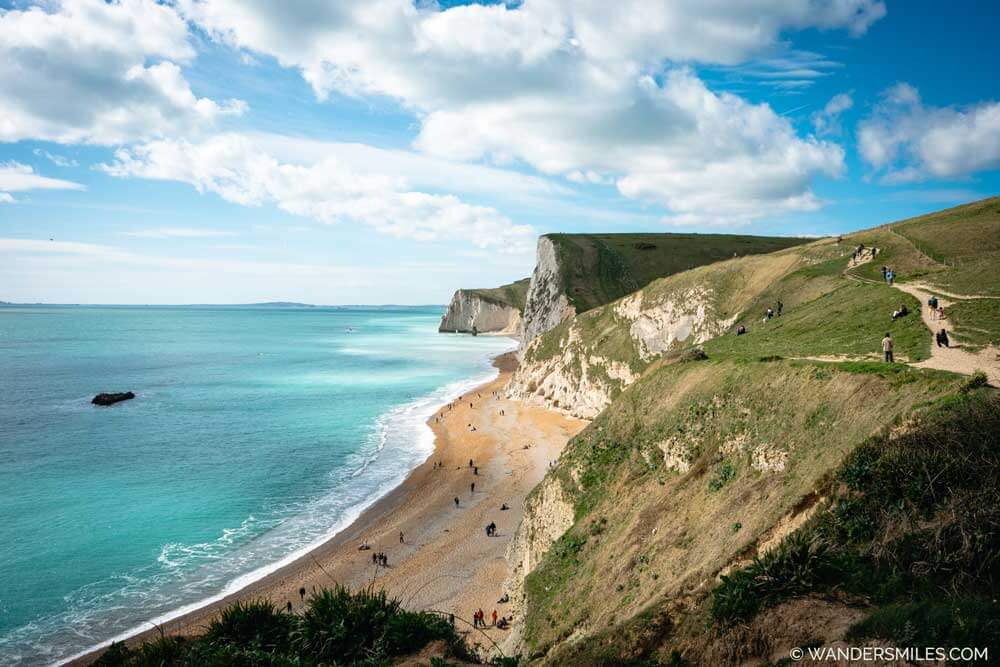
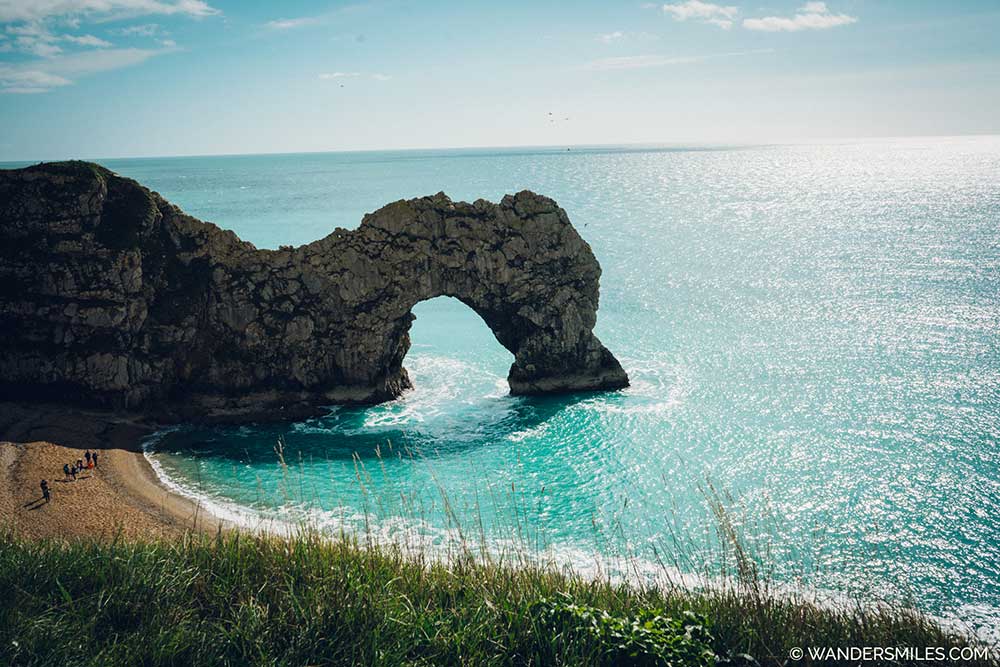
Durdle Door, a natural limestone arch along the Jurassic Coast in Dorset, stands as a captivating marvel of nature. Carved over millennia by the relentless forces of wind and waves, this iconic landmark emerges majestically from the turquoise waters of the English Channel. And what a beauty it is!
The name, “Durdle,” is derived from an Old English word meaning “hole” or “door.” The arch spans approximately 200 feet and is flanked by towering cliffs, the perfect spot to sit and admire the view.
How to get to Durdle Door & Lulworth Cove
- For the drivers, the car park offers one ticket that covers Lulworth Castle, Durdle Door and Lulworth Cove
- Local buses (15, 30 and X55) connect Wool Railway Station to West Lulworth for Lulworth Cove and Durdle Door.
- To walk from Durdle Door to Lulworth Cove is just over a 1 mile. You can either walk back or take the bus back to the car park.
- For a hassle-free experience, explore the options of Durdle Door tours.
Lulworth Cove
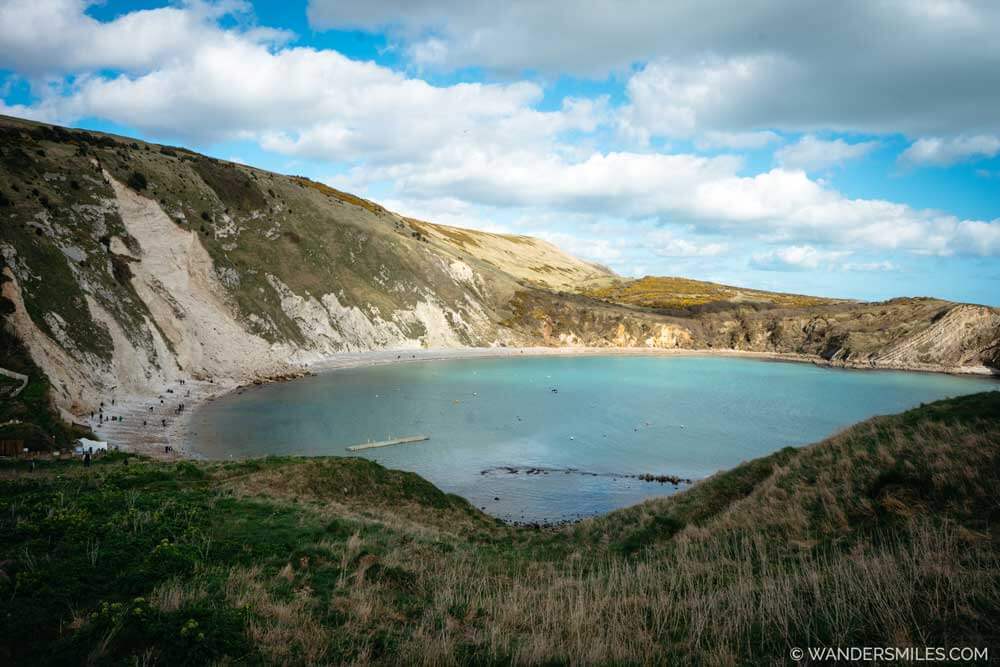
Lulworth Cove is located in a horseshoe-shaped bay, formed 10,000 years ago by the erosive forces of the sea. If you look across the bay, rocks from 150 to 65 million years old can be seen which blew my mind.
If you want to geek out with more facts about Lulworth Cove, spend a little time in the Visitor’s Centre. If you manage to walk past the tempting ice cream shops, you can grab a crab and lobster burger freshly caught by the local fishermen.
The shingle beach surrounded by towering limestone cliffs can get busy but it is worth taking the walk up to explore the infamous geological formations such as Lulworth Crumple and Stair Hole.
Corfe Castle
Corfe Castle is perched dramatically on top of a steep hill in the heart of the Isle of Purbeck. Dating back over a thousand years, this iconic fortress has witnessed centuries of tumultuous events, from medieval battles to the English Civil War.
The village is also named Corfe Castle where you can explore the quaint shops and art galleries, or take the heritage steam train on the Swanage Railway.
|| Corfe Castle is open all year | Fee to enter + free to National Trust members | LOCATION

|| Jurassic Coast Tours You May Like
DAY THREE IN DORSET: Bournemouth
Highcliffe Castle
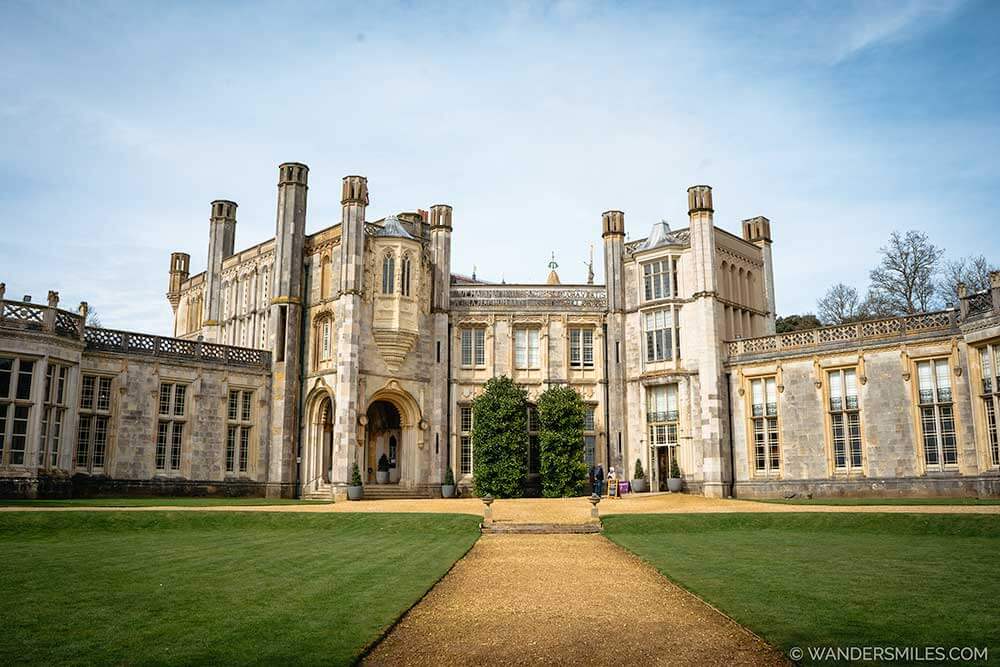
Highcliffe Castle is a stunning Victorian-era architectural treasure built in 1830 in the Gothic Revival style. The owner and visionary was Lord Stuart de Rothesay, who used the mansion to host royalty and wealthy guests. Its’ commanding clifftop position offers breathtaking views of the English Channel and the Isle of Wight.
Unfortunately, Highcliffe Castle was left as nothing more than a hollow shell following two devastating fires in the 1960s. Now, owned by BCP Council, this Grade I listed building is being renovated back to its’ former glory.
My favourite feature is the Jesse stained-glass window which dates back to 1547 as it was retrieved from the church of St.Vigour at Rouen, which was partly destroyed during the French Revolution.
|| Highcliffe Castle is open all year from Sunday-Thursday | Fee to enter | LOCATION
Hengistbury Head
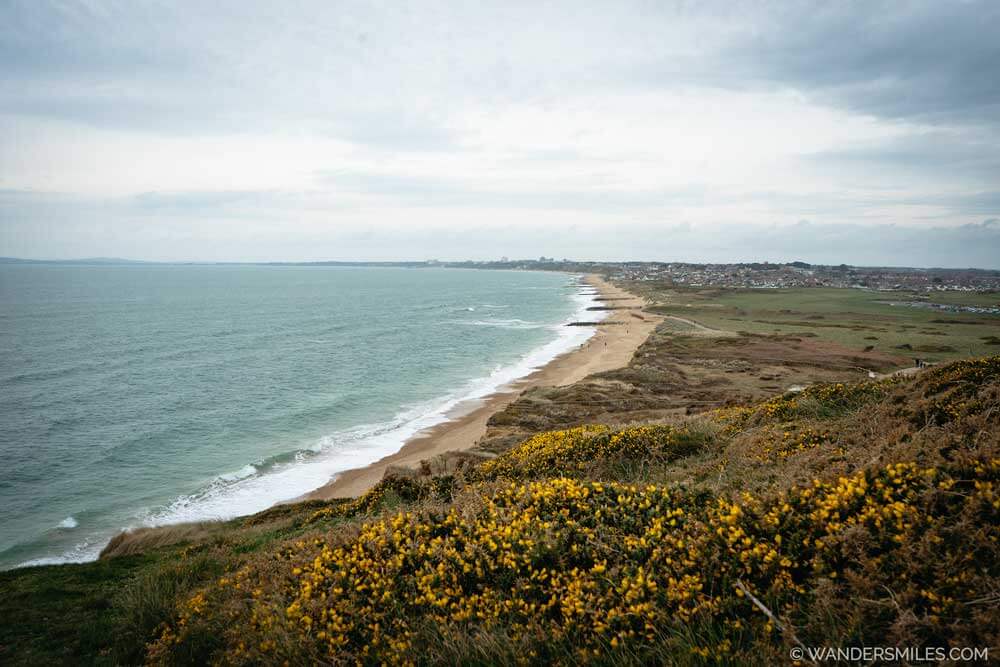
With sweeping views of the English Channel, Hengistbury Head is home to diverse habitats and remnants of ancient civilisations, which are showcased in the interactive exhibitions at the Visitors Centre.
Historically, Hengistbury Head bears evidence of Stone Age artefacts to an Iron Age hillfort, the Roman invasion of 43AD and the Battle of Mudeford between smugglers and coastguards.
The nature reserve of Hengistbury Head is home to over 500 plant species, 300 types of birds, and a superb variety of insects, reptiles, and small mammals. There is a lovely circular walk which is part of the Stour Valley Way to discover views of the Isle of Wight and Old Harry Rocks.
|| Hengistbury Head is open all year | LOCATION
Sandbanks
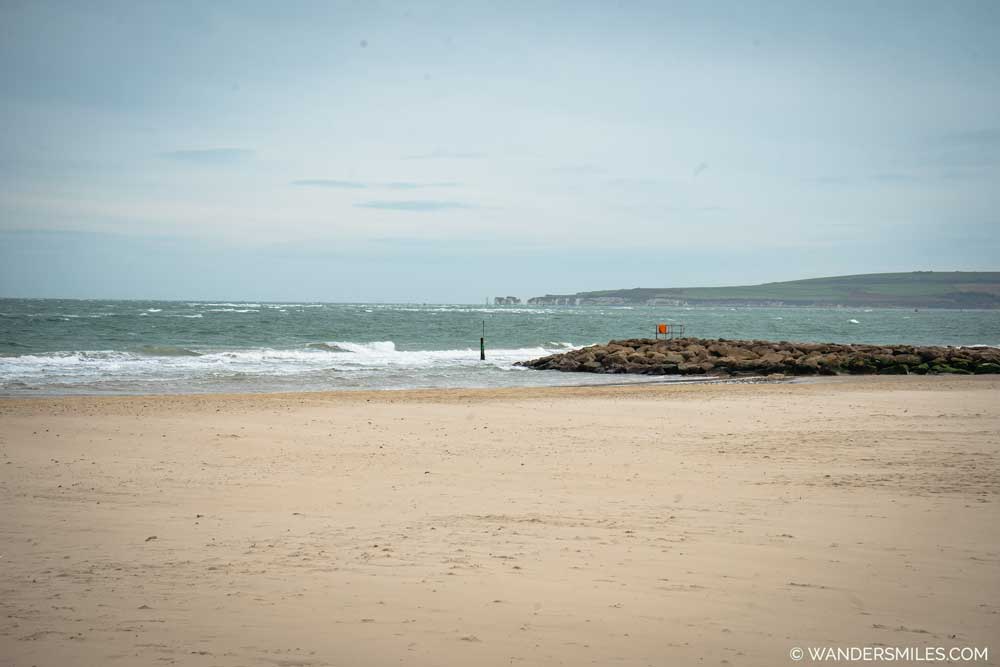
Sandbanks is situated on a narrow peninsula between Poole Harbour and the English Channel and is renowned for its golden beaches and prestigious properties.
I travelled to Dorset in March and enjoyed a blustery walk along the shores, but in warmer weather, it’s an ideal destination for water sports lovers. If you have the opportunity, consider taking a ferry to Brownsea Island, managed by the National Trust, where you can wander through wooded paths and catch glimpses of Sika deer.
|| Tours You May Like in Bournemouth
Travel Resources for 3 Days in Dorset
how to get to dorset
Getting to Dorset can be done by car, ferry, train, bus and plane. Travelling around Dorset can be done by car and public transport. It may take a little longer to navigate by bus and rail so you may wish to factor this in when planning what things to see in Dorset.
Dorset by public transport
Dorset benefits from a reliable rail network connecting it with major UK towns, cities and local stations nationwide. Check the train times and routes with Omio.
To travel by bus and rail across the southwest, the best app is Traveline South West.
Dorset by Car
For a Dorset road trip, the county is convenient to reach from any part of the UK. Although the county lacks motorways, the M5 from Bristol provides easy access to the western region, catering to travellers from the West Country, North, and Wales.
Driving does make sightseeing easier in Dorset, so you could hire a car before you set off or from the nearest train station in Dorset. My go-to for car rental is Discover Cars who also offer electric vehicles for responsible travellers. If you are driving an EV, check the charging points in Dorset.
Where To Stay in Dorset
You’ll be spoiled for choice on where to stay in Dorset. I stayed in an eco-friendly cottage in Wimborne to make the most of the Dark Sky country escape. The Old Dairy is one of the Classic Cottages Eco-Collection, and I highly recommend it for a long weekend in Dorset.
|| YOU MAY LIKE TO READ PLACES TO VISIT IN SALISBURY AND THINGS TO DO IN STRATFORD-UPON-AVON
Dorset FAQs
is dorset worth visiting?
Without a doubt! Dorset’s sandy beaches, pretty villages, and historic sites such as Corfe Castle make it an incredible destination for nature lovers, history enthusiasts, and anyone seeking an English adventure.
How many days should I spend in Dorset?
The ideal duration for a visit to Dorset depends on your interests and itinerary. A minimum of 3 days in Dorset allows time to explore its main attractions. If you can afford the time, one week in Dorset would offer a more immersive experience.
What is Dorset best known for?
Dorset is best known for its stunning Jurassic Coast, a UNESCO World Heritage Site, featuring dramatic cliffs, fossil-rich beaches, and iconic landmarks like Durdle Door and Lulworth Cove. Exploring the coastline should not be missed from your Dorset itinerary.
PIN TO PLAN 3 DAYS IN DORSET


Disclosure: This post contains affiliate links, which means I may receive a small commission if you click a link and purchase something that I’ve recommended. It comes at no cost to you. Thank you for your support.





Fantastic and detailed itinerary for Dorset! I didn’t know a lot of these places and the sea views are simply spectacular! Highcliffe Castle is so picturesque!! Well done!
It was my first visit to Dorset, and I will definitely return as there is a lot more to see!