
Why Visit Extremadura: The Wilder Side of Spain
LAST UPDATED: 29th June 2026 | ORIGINAL: 3rd January 2026
Spain is one of Europe’s most visited countries, yet whole regions still slip under the radar. If uncompromised wilderness over costa chaos is your thing, it is time to visit Extremadura.
Many travellers want Spain without queues, inflated prices, or destinations flooded with rowdy tourists and cruise crowds. Extremadura delivers exactly that. It’s one of the country’s largest regions, and one of the least populated.
Slow travel in Extremadura means tracing your route through ever-changing plains, dehesa pasture, and forgotten Spanish villages, encountering warm hospitality and eating far too well. It’s only when you have visited Extremadura, you can say you’ve seen the real Spain.
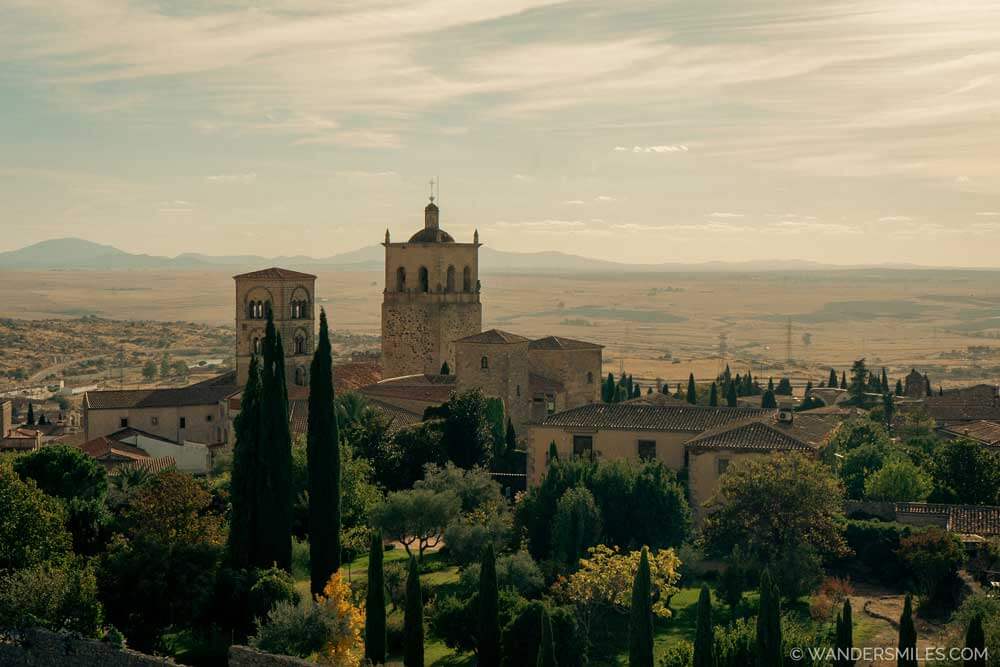
About Extremadura
Where Is Extremadura?
The landlocked region of Extremadura is in western Spain, bordering Portugal, between Salamanca in the north and Andalusia in the south. It’s one of Spain’s largest regions but also one of the least populated, with long distances between towns and wide stretches of open countryside.
Why is it called Extremadura?
Locals will proudly tell you that “extrema y dura” relates to the extreme and hard rugged terrain. However, the name Extremadura actually comes from the Latin “Extremo Duerii”, meaning “land beyond the river Duero”. It was the name given to territories newly conquered from the Moors in the 10th and 11th centuries, and its boundaries moved with the successes of the Christian Reconquest.
6 Fun Facts About Extremadura
- Extremadura is made up of two provinces, Badajoz and Cáceres, which are also the largest provinces in Spain by area.
- Extremadura has a staggering 1,500 km of inland freshwater coastline from reservoirs and rivers, and is home to a Blue Flag-awarded inland beach – Orellana reservoir.
- Several cities around the world have the same names as places in Extremadura, including Mérida, Trujillo, Medellín, and Guadalupe, linked to the region’s role in Spanish history and overseas conquests.
- The region has three UNESCO World Heritage Sites and one UNESCO Global Geopark, highlighting its cultural depth and geological value.
- Extremadura has featured as a filming location for Game of Thrones, with castles and historic towns standing in for medieval settings.
- An endangered Romance language, La Fala, is still spoken in parts of northern Extremadura.

Why You Should Visit Extremadura
I’ve been to Spain many times, and Extremadura has long been on my list to explore, and now I know why. In this blog, I’ll cover:
- reasons why you should visit Extremadura
- where to stay in Extremadura
- how to plan your trip to Extremadura
Quick Links for Extremadura Trip Planning
- Discover FREE walking tours with locals in Cáceres, Trujillo and Mérida,
- Find the best day tours in Extremadura
- Explore hassle-free, multi-day private and group tours
- Best deals on car hire in Spain

Eat Your Way Through Extremadura
Extremadura is home to some of Spain’s most respected food products. Centuries of Arab, Jewish, and Christian influence have left their mark on local cooking, coming together in dishes like savoury adefina stews and escabeche, foods cooked and preserved in pickling brine.
The region is best known for Jamón Ibérico de Bellota, produced from acorn-fed pigs raised on open dehesa pasture. But the list goes much further. Smoked paprika from La Vera, olive oil from Monterrubio, and cherries from the Jerte Valley all carry protected D.O.P. status. Add honey, lamb, veal, beef, cheeses, and wine, and the choice feels endless. I was obsessed with Queso Ibores, a paprika-rubbed goat’s cheese giving it a spicy and slightly salty flavour.
Traditional dishes like migas, made from stale bread, garlic, and chorizo, began as shepherd food. Today, chefs rework these classics using artisanal sausages, wild mushrooms, and seasonal produce, while keeping their core intact. Meals remain simple, with produce like game meats, river fish, and vegetables from small farms dominating menus.
Be prepared, though. Eating in Extremadura is not for the faint-hearted and often means long lunches, with never-ending homemade dishes appearing from the kitchen and plenty of local wine. There were certainly no complaints from me.
 Acorn-fed ham from Extremadura
- Typical dishes in Extremadura


Follow The Wine routes
Extremadura produces distinctive wines under the DO Ribera del Guadiana and Vino de la Tierra de Extremadura labels. You’ll find lively whites made from Cayetana and Pardina, alongside robust reds using Tempranillo, Garnacha, Syrah, and Cabernet Sauvignon. The region also produces surprising sparkling wines, as Extremadura is authorised for Cava production.
Vineyards sit among rolling plains and river valleys, with differences in climate and terroir across the sub-regions. Following the wine routes is an easy way to see how varied the region really is. Many bodegas are close to historic towns, so you can combine cellar visits with local food and short walks.
To explore beyond the Ribera del Guadiana route, head to Bodegas Habla near Trujillo, one of Extremadura’s most talked-about producers. Their experimental and organic approach shows just how far the region’s wine scene has come, and their pioneering white wine submerged in the Atlantic for second fermentation is a prime example. Isn’t this a perfect reason alone to visit Extremadura?


Centuries Of History from Romans To Reconquista
The Romans left the strongest imprint on Extremadura, which is home to some of Spain’s most impressive Roman remains. Mérida, the former Roman capital of Lusitania, is a recognised UNESCO World Heritage Site where you can explore the well-preserved Roman theatre, amphitheatre, and circus.
After the Roman era came Visigothic rule, followed by centuries of Moorish control after the invasion of 711 AD. During the Al-Andalus period, fortified towns, alcazabas, irrigation systems, and education. Places like Badajoz, Mérida, and Trujillo still show traces of Islamic urban planning, from hilltop citadels to surviving walls and gates, many later adapted rather than removed by Christian rulers.
The Reconquista, which lasted from 718 to 1492, saw Christian kingdoms gradually reclaim territory, reshaping towns and power structures. This period was followed by the Spanish Inquisition, which began in 1478 and continued until 1834, targeting non-Catholics and heresy.
In the 15th and 16th centuries, Extremadura became known as the birthplace of several conquistadors, including Francisco Pizarro and Hernán Cortés. Wealth from overseas conquests funded grand plazas, churches, and palaces that still dominate many towns.
Why does this matter for your Extremadura trip? Understanding the past gives context as you explore. You can still see the influence of every era when you visit Extremadura, as each culture has left something behind, from architecture and food to language and heritage festivals.

Endless Quaint Towns and Villages
The options for where to stop are endless. Extremadura’s towns and villages are small in scale but seismic in terms of character.
In the province of Cáceres, towns are closely tied to the surrounding landscape. Valverde de la Vera is known for Los Empalaos, a Holy Week procession dating back to the 16th century, and for its preserved Verata-style houses built with local materials such as stone, adobe, and wood. Trujillo rises from the plains with its castle and vast Plaza Mayor, dominated by a statue of conquistador Francisco Pizarro. For something truly off the radar, follow the A Fala route through San Martín de Trevejo, Eljas, and Valverde del Fresno, where an endangered Romance language is still spoken today.
Further south, in the province of Badajoz, towns show Andalusian and Portuguese influence. Zafra, often called Sevilla la Chica or “Little Seville”, has an elegant old town and the Alcázar Palacio de los Duques de Feria at its heart. Jerez de los Caballeros, known as the “City of the Five Towers”, combines Moorish and Renaissance architecture, with the 70-metre-high belfry of the Baroque Church of Santa Catalina rising above the town.

Spectacular Wild Nature
Wild nature is one of Extremadura’s biggest draws. The Jerte Valley is known for its cinematic mountain scenery and the natural pools at Los Pilones. Smooth granite basins filled with clear river water create one of the region’s best places to cool off after a hike in warmer months. In spring, the valley is also famous for its cherry blossom bloom, when the slopes fleetingly turn white for a few short weeks.
Monfragüe National Park shows a very different side of the region. This is prime territory for birdlife, with griffon vultures, black storks, and Spanish imperial eagles soaring above the Tagus River. Venture further west to discover the Tajo Internacional Natural Park, a UNESCO Biosphere Reserve that stretches along the Portuguese border, with deep river canyons with unplugged trails.
With skies largely untouched by city lights, Extremadura is one of Europe’s best regions for dark sky tourism. Its observatories and certified Starlight Destinations offer stargazers and astrophotographers the chance to seek out staggering celestial skies with remarkable clarity.

Extremadura Is a Road Less-Travelled
Extremadura is one of the least visited regions in Spain, especially when compared to the unfiltered energy of the coast, the islands, or cities like Barcelona and Seville. Tourism exists here, but it’s low-key and spread out. You won’t find cruise crowds (thankfully), and there’s no need to queue for attractions or restaurants.
Being away from mass tourism changes how you experience the region. Roads are quiet, some villages have only a handful of residents, and nature reserves stay calm even during peak months elsewhere in Spain. Towns come alive on market days because locals show up, not throngs of tour groups. Extremadura offers something increasingly rare: the chance to see Spain as it is, without being polished for visitors.

Plan A Trip To Extremadura
Where To Stay
When it comes to where to stay in Extremadura, the Paradores are hard to beat. These state-run hotels are set inside restored castles, monasteries, and historic buildings, often in locations you’d never find through standard hotel searches.
I stayed in several Paradores across Extremadura, including Cáceres, Trujillo and Plasencia. Each had its own personality, inspired by the building it occupies, but all shared the same strengths: comfortable rooms and restaurants rooted in the farm-to-table ethos. Meals leaned heavily on regional produce and traditional recipes, making the Paradores as much about eating well as sleeping well.


How To Get Around Extremadura
Getting around Extremadura is straightforward, but your experience depends on how far you want to roam. The main cities, including Mérida, Badajoz, Plasencia, and Cáceres, are connected by train from Madrid and Seville. Services are run by Renfe, and while some routes require a change, rail works well if you’re sticking to the larger towns.
Buses also cover much of the region, with operators such as LEDA, ALSA, and Avanza running regular services. That said, public transport has its limits. To reach smaller villages, natural parks, and rural areas, renting a car is essential. It gives you the freedom to stop where you want and travel at the region’s unhurried pace.
CHECK TRAIN AND BUS SCHEDULES || GET A QUOTE FOR CAR HIRE
Where Next After Extremadura?
Extremadura works well as a bridge between regions. Head north into Castilla y León and you’ll quickly reach Salamanca, one of Spain’s most beautiful cities, known for its golden sandstone architecture and thriving university atmosphere.
Travel south and Andalucía opens up with the quiet trails of the Sierra Norte de Sevilla, the big city feel of Seville itself, or the coast around Málaga. If you’re on the roads, break the journey in Antequera noted for prehistoric dolmens, limestone landscapes, and 14th-century Moorish fortress make it far more than a pit stop.

PIN To Visit Extremadura


Disclosure: This post contains affiliate links, which means I may receive a small commission if you click a link and purchase something that I’ve recommended. It comes at no cost to you. Thank you for your support.




Pretty sure I would love the endless quaint towns and villages in Extremadura. They are perfect for wandering around, taking pictures, and enjoying farmers’ markets.
Many of the villages in Extremadura feel like they have stopped in time — it’s worlds apart from the Spain most frequently visited!
Extremadura looks fabulous! I love the architecture there and can see myself walking around. Thanks for sharing. Definitely adding this region to my list of places to visit in Spain.
I can absolutely recommend Extremadura. The diverse range of architecture and influences was fascinating.
I love Jamon, and I love taking the road less traveled. Sounds like Extremadura would be a great place to visit!
Extremadura is the perfect trip for foodies and travellers looking for crowd-free trip. I’m sure you’d love it!