Best Costa Rica National Parks and Reserves You Need To Visit
LAST UPDATED: 31st August 2026 | ORIGINAL: 19th August 2025
Costa Rica draws travellers from around the world who want to connect with nature in its purest form. If you’re searching for the best Costa Rica national parks and reserves, you’ll find everything from smile-inducing volcanoes and misty cloud forests to beautiful coral reefs and turtle nesting beaches.
With more than 160 protected areas, from national parks to reserves and conservation areas, the real challenge is deciding where to go. Before my trip to Costa Rica, I had plenty of questions and wanted to make the most of my time exploring the country’s natural wonders while still embracing the pura vida lifestyle.
In this guide, I’ll walk you through my favourite national parks and reserves in Costa Rica, with tips on what to see, where to stay, and how to make the most of your visit. You might snorkel coral reefs in Cahuita, trek deep into the forests of Corcovado, or wander the canopy bridges near Arenal. Let’s start planning the trip that fits your style and gives you the best chance of spotting Costa Rica’s incredible wildlife.

About Costa Rica National Parks & Reserves
My main motivator to visit Costa Rica was to see the abundance of wildlife that thrives in one of the most biodiverse places on Earth. You really are spoiled for choice, so I hope this blog helps you decide which Costa Rica national parks you’d like to explore as a responsible tourist. Expect to find tips on:
- national parks in Costa Rica
- nature reserves in Costa Rica
- where to stay nearby
- suggested tours
MY TOP TIPS`: If you’re planning a trip to Costa Rica, consider planning tour options and availability to help plan your trip. To discover more Central American gems, check out Pico Bonito National Park in Honduras!

Best Costa Rica National Parks
Cahuita National Park
Cahuita National Park, on Costa Rica’s southern Caribbean coast, quickly became one of my favourites. It’s smaller than many others — just over 1,000 hectares of land plus a protected marine area — but it delivers breathtaking wildlife experiences.
Parque Nacional Cahuita has all the landscapes you dream of in Costa Rica. Its thriving rainforest, two white-sand beaches (Playa Blanca and Puerto Vargas), and colourful coral reefs are a joy to explore — you can watch howler monkeys, sloths, Jesus Christ lizards, and toucans along the trail in the morning, then snorkel with tropical fish and sea turtles in the afternoon.
I loved the easy 8-kilometre coastal trail from the Kelly Creek entrance, which winds through palm groves and mangroves with plenty of shady spots to see wildlife. Stay on the path and avoid reaching into the bush as there are vipers hiding camouflaged in the trees.
The coral reef in Cahuita is one of the largest and most important in Costa Rica, and has been protected since 1970. Snorkelling here is only permitted with certified guides trained to protect the reef from further damage. Beneath the surface, divers and snorkellers can discover over 35 species of coral and hundreds of tropical fish.
There’s no lodging inside the park, but the laid-back village of Cahuita is right next door. You’ll find guesthouses, eco-lodges, and budget cabinas within walking distance of the entrance, plus plenty of spots to enjoy Caribbean-style food after a day exploring. I based myself in Puerto Viejo, a lively beach town known for its reggae vibes, surf spots, and laid-back pura vida atmosphere.
|| STAY IN CAHUITA TOWN OR PUERTO VIEJO || BEST CAHUITA NATIONAL PARK TOURS
Arenal National Park
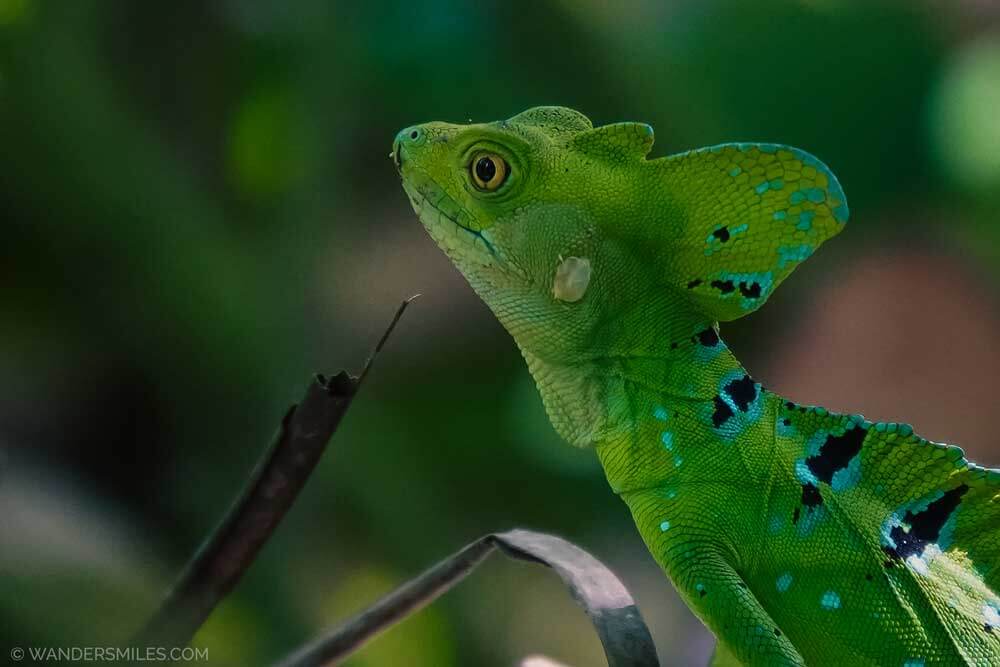
It’s hard to miss the imposing Arenal Volcano that is the centrepiece for Parque Nacional Volcán Arenal — and there’s good reason that you shouldn’t miss it! This fantastic national park is one of Costa Rica’s best, located near the town of La Fortuna in the northern part of the country. The verdant rainforest is filled with hardened lava fields from past eruptions, exotic birds, sleepy sloths, and supposedly howler monkeys, although it was the one place in Costa Rica where I didn’t actually see a monkey with my own eyes!
The National Park is incredibly unique for its namesake volcano — there aren’t many parks around the world where you can experience an dense jungle ecosystem and a volcano. Although now in a resting phase, Arenal was Costa Rica’s most active volcano for more than four decades. The most recent active period began in 1968 with a massive eruption that destroyed three small villages and claimed 87 lives. From that day until July 2010, Parque Nacional Volcán Arenal remained in near-constant activity — sending plumes of smoke skyward and spilling streams of lava almost daily.
For a place to stay, I can’t recommend Finca Luna Nueva enough. Just outside La Fortuna (about 45 minutes), this eco-lodge is surrounded by organic gardens and rainforest. It’s not only stunning but also one of Costa Rica’s best vegan-friendly hotels, with delicious dishes made from ingredients grown right on the property. After a day of exploring the park, this is the perfect place to relax and unwind.
|| CHECK ACCOMMODATION IN LA FORTUNA || BEST ARENAL NATIONAL PARK TOURS

Corcovado National Park
The largest park in the country was one of the best places I visited during my 2 weeks in Costa Rica. Corcovado National Park, located in the southwest on the Osa Peninsula, is especially remarkable for having the largest primary forest on the Pacific side of the Americas. This pristine wilderness protects around 2.5% of the planet’s biodiversity — that’s quite an astonishing figure for a single park.
On my visit, I spotted white-nosed coatis rummaging in the undergrowth, squirrel and howler monkeys swinging through the canopy, and bright woodpeckers drumming above. Tapirs, sloths, crocodiles and countless other species also call this place home.
The two most common locations you can visit Corcovado National Park from will be Drake and Puerto Jimenez. I booked a day tour from Drake, where I stayed in Martina’s Place Hostel, although you can also stay overnight at the park.
In true Costa Rican fashion, sustainability efforts to keep Corcovado as a paradise for wildlife include limiting the number of daily visitors, so you can rest assured that you will find no crowds and much nature to admire.
|| STAY IN CORCOVADO NATIONAL PARK || BEST CORCOVADO TOURS

Manuel Antonio National Park
Manuel Antonio National Park, on Costa Rica’s central Pacific coast, may only cover 16 km², but it’s one of the most stunning and wildlife-rich places I’ve ever experienced. I visited solo and started my day with a guided walk — the best choice I could have made. Within minutes, I was watching white-faced capuchin monkeys swinging overhead, an agouti darting across the path, and a sloth so perfectly hidden in the treetops that I’d have walked right past it without my guide’s binoculars.
Entrance is $18 USD, and guided tours range from $40–$80 USD — worth every cent for the chance to see and learn so much. After my morning adventure, I headed straight to Playa Manuel Antonio, where I spent the afternoon swimming, lounging on my beach blanket, and listening to the waves. If you’re planning beach time here, check out my beach hacks for solo female travellers to keep your belongings safe while you relax.
You can’t bring your own food into the park, but the café is a fun stop — just be ready for curious monkeys eyeing your lunch. Outside the gates, the lively town of Quepos has everything from budget hostels to boutique eco-lodges, plus beachfront restaurants perfect for catching a spectacular Pacific sunset.
For me, Manuel Antonio was the perfect mix of adventure, wildlife, and relaxation — a must for anyone visiting Costa Rica.
|| STAY IN MANUEL ANTONIO || BEST MANUEL ANTONIO TOURS

Rincón de la Vieja National Park
Rincón de la Vieja National Park is a unique volcano national park that spans over 34,000 acres in the rainforest. It’s only 45 minutes north of Liberia, and the perfect day trip if you’re looking for a change of scenery from the beaches in Guanacaste.
The park is home to the region’s largest active volcano, and the main trail (Las Pailas) will lead you out to see everything from boiling mud pots to steam vents and fumarolic lagoons. It’s an easy loop trail that is well-paved and only takes around 2 hours to hike round trip. Beyond the main trail, there are two hidden waterfalls (La Cangreja, Escondida) that you can visit by doing a longer hike. To hike these trails, you’ll go west from the visitor centre, rather than east for the main trail. The waterfall hikes are more rugged but are one of the best places to spot monkeys and wildlife in the park.
Entrance to Rincón de la Vieja is $16.95 USD + tax per adult, and you can purchase tickets online beforehand at SINAC. If you’re planning a visit, some of the best places to stay are Buena Vista Del Rincon Hotel or Hotel Guachipelin. These are beautiful spa resorts with hot springs and onsite tour centres that offer activities like ziplining and horseback riding. If you’re staying in Tamarindo, it’s a 2.5-hour drive, and there are tours available that provide transportation from hotels in the area.
|| STAY IN LIBERIA || BEST RINCON DE LA VIEJA NATIONAL PARK TOURS

Tenorio Volcano National Park
One hour and half north of La Fortuna lies a stunning National Park called Tenorio. It is part of the Guanacaste mountain range in the north of the country. But Tenorio is not only the name of the park, it is also the name of the volcano around which the park is located. Although considered dormant, you can see volcanic activity such as fumaroles and hot springs.
The national park is a tropical wild forest with many unique plant and animal species, as well as incredible nature landscapes. Among them, we saw one of the most incredible waterfalls we had ever seen: Rio Celeste waterfall!
It was pouring rain when we visited and yet, the water kept its incredible blue colour, while being surrounded by lush vegetation. Then, keep walking to Tenorio viewpoint to have a panoramic view of the park.
Time for a swim in the beautiful blue lake of Laguna Azul, before your final stop: Teñideros. Two rivers of different colors meet there, creating an impressive contrast.
After this 3-hour walk in the national park, you’ll probably be tired. We recommend staying in Liberia or La Fortuna since there’s not much accommodation in the Tenorio area. In La Fortuna, La Tigra Rainforest Lodge is fabulous!
|| STAY IN LIBERIA OR LA FORTUNA || BEST TENORIO NATIONAL PARK TOURS

Tortuguero National Park
Tortuguero may be the least accessible of Costa Rica’s national parks. It’s located near the border with Nicaragua in the northeast, on the Caribbean coast, in the province of Limón. It comprises an area of 312 km². An incredibly diverse habitat permeates the national park — black volcanic beaches meet rainforest and lush canals. Mangroves thrive there, and you can even find swamps.
It can only be reached by plane or by boat through the dense network of canals. However, the Tortuguero National Park also includes a small village, with all tourist amenities. Hotel Icaco is a simple beachside accommodation option. The village also has a turtle conservancy centre, which helps with local turtle nesting in the area.
The canals in and on the way to Tortuguero house an immense array of species. We saw several sloths, caimans, monkeys, turtles, iguanas, and countless types of birds.
It’s recommended to stay at least two days in Tortuguero, as it’s one of the most beautiful places in Costa Rica. You’ll get to enjoy spending time on a wild, dark beach (no swimming, but plenty of dipping opportunities!), surrounded by luxuriant rainforest and away from the busy world.
|| STAY IN TORTUGUERO || BEST TORTUGUERO NATIONAL PARK TOURS

Best Costa Rica Reserves
Gandoca-Manzanillo Wildlife Refuge
Gandoca-Manzanillo Wildlife Refuge, tucked away on Costa Rica’s southern Caribbean coast near the Panama border, felt like one of the most untouched places I visited. Covering more than 50,000 acres of land and sea, it protects a mix of lowland rainforest, mangroves, wetlands, and coral reef — so you get a little bit of everything in one reserve.
Walking along the sandy coastal trails, I passed giant almond trees with howler monkeys roaring overhead, while bright poison dart frogs hopped around the leaf litter, and brightly-coloured eyelash vipers are curled up on the tree trunks.
Birdwatchers will love Gandoca-Manzanillo too — I spotted toucans, great curassow and heard the unique calls of the Montezuma oropendolas like sound effects used in video games. Refugio Nacional Gandoca-Manzanillo is also an important nesting site for leatherback turtles, so visiting at the right time of year can mean seeing these gentle giants lay their eggs. Offshore, guided snorkelling trips let you explore coral reefs alive with colourful fish.
The closest base is the small fishing village of Manzanillo, where you’ll find rustic cabinas, guesthouses, and eco-lodges just steps from the beach. I stayed nearby in Puerto Viejo, a fun Caribbean town with more dining and nightlife options, and took a day trip into the refuge.
|| STAY IN PUERTO VIEJO DE TALAMANCA || BEST GANDOCA-MANZANILLO REFUGE TOURS

Monteverde Cloud Forest Reserve
Visiting the Monteverde Cloud Forest Reserve is a highlight of any Costa Rica trip. At 1600 metres above sea level, this is the highest point in the country and offers an incredible look at a lush, primary forest, measuring 10,500 hectares.
A natural phenomenon happens here where the wind captures moisture at a high elevation and traps it against the mountain, creating the clouds and mist that make this a unique cloud forest. As a result, in this environment there is a large wildlife population, including 100 species of mammals, 52 species of hummingbirds and 400 species of birds. The most notable bird is the Resplendent Quetzal, which bird watchers come from around the world to see.
Visitors can explore the reserve on the 10 different trails, and several different excursions are available, including guided nature treks, bird watching tours and night walks.
The park is easily accessible from town. A highly recommended property is the Monteverde Lodge & Gardens, which has very comfortable rooms, private trails for exploration, a pool for relaxation and a fabulous restaurant on site with spectacular views from the balcony.
|| STAY IN MONTEVERDE || BEST MONTEVERDE CLOUD FOREST RESERVE TOURS

Mistico Arenal Hanging Bridges Park
Just a 30 minute drive from La Fortuna, Mistico Arenal Hanging Bridges Park is one of Costa Rica’s most unique reserves. Set within a private 600-acre area, the park protects lowland rainforest that serves as a vital habitat for a variety of wildlife.
While you’ll probably spot animals like monkeys, sloths, and tropical birds, the park is most famous for its system of 16 bridges, 6 of which are suspension bridges sitting high above the ground. This vantage point is perfect for wildlife watching at canopy level – plus, it’s super fun to cross the long bridges, which offer stunning views of waterfalls and Arenal Volcano. We spotted poison dart frogs and snakes in the dense undergrowth, spider monkeys and Blue Morpho butterflies in the treetops, and motmots and toucans flying overhead, all in a single hike.
Arrive early to avoid the crowds and hire a local guide, who can point out animals you might miss exploring on your own. While you can’t stay in the park itself, numerous options sit nearby in La Fortuna, from luxury hot spring resorts like Tabacón Thermal Resort & Spa to nature-based retreats like Sangregado Lodge, which sits conveniently close to the park entrance and makes the perfect base for a day out in the park.
|| STAY IN LA FORTUNA || BEST MISTICO HANGING BRIDGES TOUR

Quick links to Visit Costa Rica
- Compare flight prices on Trip.com
- Best car hire deals with Discover Cars
- Get the best hotels on Booking.com
- Find day trips and multiday tours on GetYourGuide or Viator
- Travel Insurance: 5% Off HeyMondo or SafetyWing
PIN for Costa Rica National Parks


Disclosure: This post contains affiliate links, which means I may receive a small commission if you click a link and purchase something that I’ve recommended. It comes at no cost to you. Thank you for your support.